


Eating disorders affect both mental and physical health. They require structured and specialized care. Choosing the right treatment facility in Georgia can directly impact recovery success.
The right program provides medical oversight, therapy, and nutrition support in one coordinated plan. Care should match the person’s current medical and emotional needs.
What Should You Look for in an Eating Disorder Treatment Facility?
The right treatment center offers licensed specialists, structured support, and evidence-based therapy. Eating disorders are not only about food. They often involve anxiety, depression, trauma, or obsessive thinking. A strong program treats the whole person, not just eating behaviors.
Look for facilities that provide:
- Psychiatric evaluation and medication management
- Individual therapy with licensed clinicians
- Nutrition counseling with registered dietitians
- Ongoing progress monitoring
- Family involvement when appropriate
Treatment should feel structured, safe, and supportive while addressing both emotional and physical health needs.
What Levels of Care Are Available in Georgia?
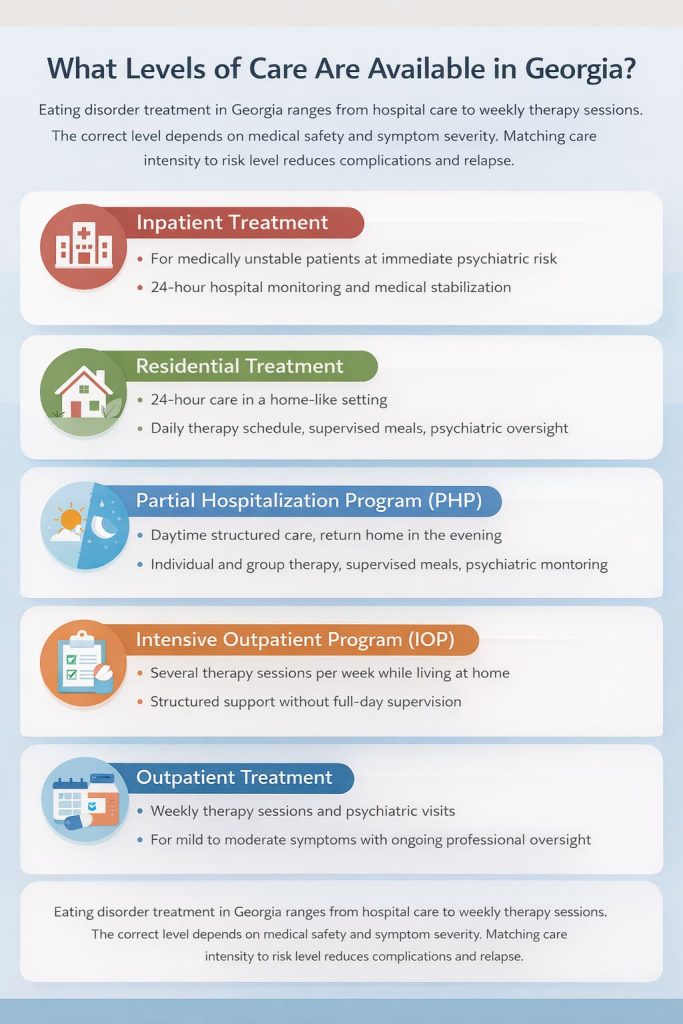
Eating disorder treatment in Georgia ranges from hospital care to weekly therapy sessions. The correct level depends on medical safety and symptom severity. Matching care intensity to risk level reduces complications and relapse.
Inpatient Treatment
Inpatient care is for individuals who are medically unstable or at immediate psychiatric risk. Patients receive 24-hour hospital monitoring with continuous medical supervision. This level may be necessary for severe weight loss, heart irregularities, dehydration, fainting, or suicidal thoughts.
Medical stabilization is the priority before transitioning to lower levels of care.
Residential Treatment
Residential programs provide 24-hour care in a structured, home-like setting. Patients live onsite and follow a daily treatment schedule that includes therapy, supervised meals, and psychiatric oversight. This level supports individuals who are medically stable but need full-time supervision and behavioral support.
Partial Hospitalization Program (PHP)
PHP provides structured care during the day while patients return home in the evening. Programs often include supervised meals, individual therapy, group sessions, and psychiatric monitoring. PHP works well as step-down care after inpatient treatment or as an alternative to residential care.
Intensive Outpatient Program (IOP)
IOP offers therapy several days per week while allowing work or school attendance. It provides structured support without full-day supervision and helps patients transition back to normal routines safely.
Outpatient Treatment
Outpatient care involves weekly therapy sessions and psychiatric visits. It is appropriate for mild to moderate symptoms or long-term recovery maintenance with ongoing professional oversight.
How Do You Know Which Level of Care Is Right?

The correct level of care depends on medical stability, psychiatric symptoms, and daily functioning. A professional evaluation helps determine the safest and most effective starting point.
Warning signs that require higher care include:
- Rapid weight loss
- Frequent purging
- Severe food restriction
- Dizziness or fainting
- Suicidal thoughts
Early intervention improves recovery outcomes and reduces medical risk.
Quick Comparison of Treatment Levels in Georgia
| Level of Care | Medical Monitoring | Time Commitment | Best For |
|---|---|---|---|
| Inpatient | 24-hour hospital care | Full-time stay | Medical instability |
| Residential | 24-hour structured support | Full-time stay | Severe behavioral symptoms |
| PHP | Daytime only | 5–6 days per week | Step-down from higher care |
| IOP | Several hours per day | 3–5 days per week | Moderate symptoms |
| Outpatient | Periodic visits | Weekly sessions | Mild symptoms or maintenance |
Choosing the correct level prevents relapse and unnecessary hospital stays while supporting steady recovery progress.
What Credentials Should a Treatment Facility Have?
A reputable program employs licensed professionals with eating disorder expertise. Coordinated care between psychiatry, therapy, and nutrition services strengthens outcomes.
Look for:
- Board-certified psychiatrists
- Licensed therapists
- Registered dietitians
- Coordinated care teams
Evidence-based therapies may include Cognitive Behavioral Therapy, Dialectical Behavior Therapy, Family-Based Therapy for adolescents, and medication management when needed. Reputable therapist such as MD Zehra Erdeve Temiz ,a certificed psychriatist at MD Psychiatry Clinic who are expert in this .Their qualified teams improve treatment outcomes and reduce medical and psychiatric complications.
Does Insurance Cover Eating Disorder Treatment in Georgia?
Most insurance plans cover eating disorder treatment under mental health parity laws. Coverage varies based on plan details and level of care required.
Before starting treatment, confirm:
- In-network status
- Required preauthorization
- Deductibles and copays
- Covered levels of care
Many clinics assist with benefit verification to reduce financial stress and prevent unexpected costs.
Questions to Ask Before Choosing a Facility
Clear answers build confidence in your decision and help determine clinical fit.
Ask the treatment center:
- What eating disorders do you treat?
- What therapies are used?
- How is progress measured?
- How long does treatment typically last?
- What aftercare planning is provided?
Transparency reflects professionalism, experience, and commitment to long-term recovery.
At MD Psychiatry Clinic, care is compassionate and evidence-based. Treatment focuses on psychiatric stability, medical safety, and coordinated recovery planning. Each patient receives individualized support based on symptom severity and overall health.
We serve patients across Georgia, including Alpharetta and surrounding communities near North Point Mall and Avalon. The clinic provides accessible outpatient psychiatric care for adults who need structured support during eating disorder recovery.
Our Approach to Eating Disorder Treatment Support in Georgia
We provide:
- Comprehensive psychiatric evaluations
- Medication management tailored to your needs
- Monitoring for side effects and symptom changes
- Coordination with therapists and registered dietitians
Ready to Start Eating Disorder Treatment Support in Georgia?
If eating concerns, food restriction, binge eating, purging behaviors, or body image distress are affecting your daily life, professional psychiatric support is available. Early evaluation can help determine the appropriate level of care and next steps.
You can schedule an appointment to connect with a licensed psychiatric provider and choose a time that fits your schedule. If you have questions about medication management, outpatient psychiatric care, or virtual visits, the team is available to assist.
📞 Call: 770-680-2302
📧 Email: hello@mdpsychclinic.com
Hours:
Monday–Friday, 8:00 AM – 5:00 PM
Location:
3235 North Point Parkway, Suite 203
Alpharetta, GA 30005