


Binge eating disorder can quietly take over daily life. A person may keep showing up for work, family, and responsibilities while privately feeling stuck in a cycle of eating, guilt, shame, and loss of control. It is a real mental health condition, not a lack of discipline.
In Georgia, early treatment can make recovery more stable and more manageable. Support can address not only binge eating, but also the stress, depression, anxiety, or sleep problems that may be making the cycle worse.
What Binge Eating Disorder Really Means
Binge eating disorder is more than occasional overeating. It involves repeated episodes of eating a large amount of food in a short period of time while feeling unable to stop or control the behavior.
These episodes are often followed by emotional distress. A person may feel embarrassed, ashamed, or upset after eating. Some people try to hide the behavior for a long time before asking for help.
Common signs may include:
- Eating much faster than usual
- Eating until uncomfortably full
- Eating when not physically hungry
- Eating alone because of embarrassment
- Feeling guilt or shame after eating
- Feeling stuck in a repeated cycle that is hard to stop
For some adults, it helps to understand how these symptoms fit within broader eating disorder treatment.
Why Getting Help Matters
Many adults delay care because they think binge eating is just a bad habit. Others believe treatment is only for severe cases. In reality, support can help long before symptoms become overwhelming.
When binge eating continues, it can affect:
- Mood
- Confidence
- Relationships
- Sleep
- Daily functioning
- Physical comfort
- Emotional stability
The longer the cycle continues, the harder it may feel to break alone. That is why early treatment matters.
Signs It May Be Time to Get Help
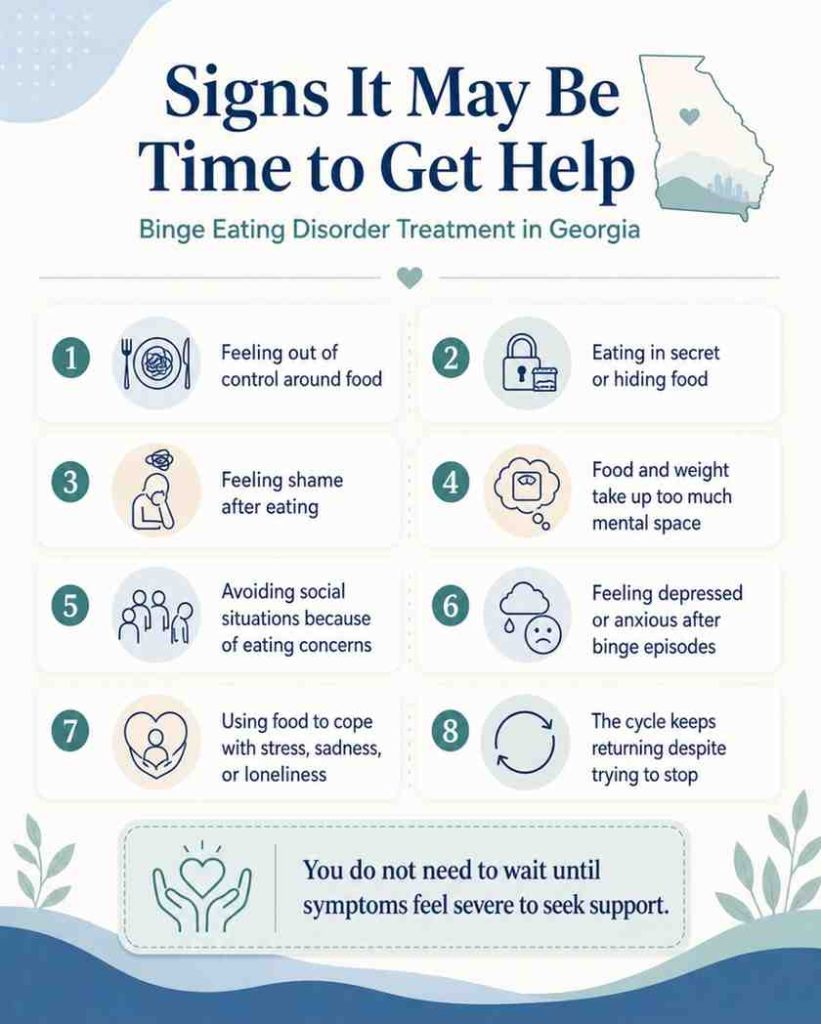
It may be time to seek professional support when binge eating is no longer occasional and starts affecting everyday life.
You may need treatment if:
- You repeatedly feel out of control around food
- You eat in secret or hide food
- You feel shame after eating
- Food and weight take up too much mental space
- You avoid social situations because of eating concerns
- You feel depressed or anxious after binge episodes
- You use food to cope with stress, sadness, or loneliness
- The cycle keeps returning despite trying to stop
When emotional symptoms are rising at the same time, broader adult mental health services may also be an important part of care.
When Binge Eating May Need Professional Treatment
Not every difficult eating pattern means a person has binge eating disorder. But if the behavior is repeated, distressing, and hard to control, it is worth getting evaluated.
Professional treatment becomes more important when:
| Sign | Why It Matters |
| Binges happen regularly | The pattern may be becoming more established |
| Shame is getting worse | Emotional distress can deepen the cycle |
| Mood symptoms are increasing | Underlying mental health concerns may be involved |
| Sleep is poor | Low sleep can worsen coping and cravings |
| Work or relationships are affected | The condition is interfering with daily life |
| You feel trapped in the cycle | More structured support may be needed |
A professional evaluation can help clarify what is happening and what type of treatment makes the most sense.
What Can Contribute to Binge Eating Disorder
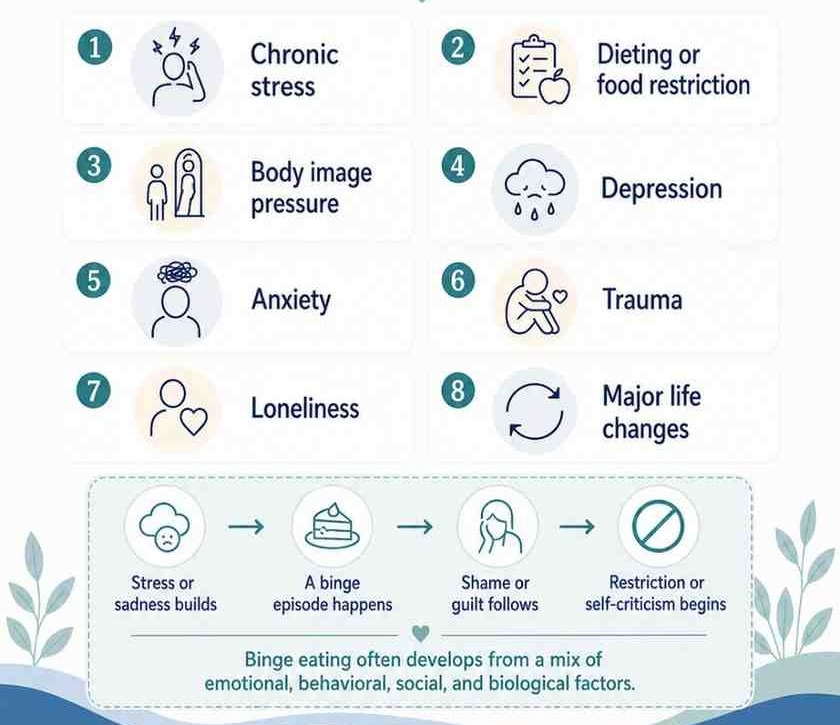
There is no single cause of binge eating disorder. It can develop from a mix of emotional, behavioral, social, and biological factors.
- Chronic stress
- Dieting or food restriction
- Body image pressure
- Depression
- Anxiety
- Trauma
- Loneliness
- Major life changes
A common cycle may look like this:
| What Happens | What Follows |
| Stress, sadness, or anxiety builds | Food starts to feel comforting |
| A binge episode happens | There may be temporary relief |
| Shame or guilt follows | Emotional pain increases |
| Restriction or self-criticism begins | The cycle becomes easier to repeat |
This is why treatment should focus on more than food alone.
Mental Health Conditions Often Connected to Binge Eating

Binge eating disorder often overlaps with other mental health concerns. When these conditions are not addressed, recovery can feel harder.
Common related concerns include:
- Depression
- Anxiety disorders
- Sleep problems
- Trauma-related stress
- Low self-esteem
- Body image distress
- Substance use issues
When low mood is part of the picture, support for depression care may need to be included in treatment. In some cases, poor sleep also plays a major role in worsening mood, cravings, and emotional control, which is why sleep disorder support can matter.
What Treatment for Binge Eating Disorder May Include
Treatment depends on symptoms, emotional distress, and the person’s overall health needs. The most helpful care usually addresses both the eating pattern and the emotional issues behind it.
A treatment plan may include:
Psychiatric Evaluation
A psychiatric evaluation helps identify whether binge eating disorder is present and whether depression, anxiety, trauma, or another condition is contributing. It can also help determine the right level of care.
Therapy
Therapy is often a central part of recovery. It may help a person:
- Identify binge triggers
- Reduce shame-based thinking
- Build healthier coping skills
- Improve emotional regulation
- Create more stable eating patterns
Medication Management
Medication may help in some cases, especially when binge eating happens alongside depression, anxiety, or impulsive symptoms. It is not the only treatment, but it may be part of a larger care plan.
Nutrition Support
Nutrition support can help reduce the restrict-binge cycle and create more consistent eating habits. The goal is steadier eating patterns and less distress around food.
Ongoing Follow-Up
Recovery usually takes time. Follow-up visits help monitor symptoms, adjust care, and support steady progress.
When a Higher Level of Care May Be Needed
Some adults do well with outpatient care. Others need more structure and support.
A higher level of care may be worth considering when:
- Binges are frequent and getting worse
- Depression or anxiety feels severe
- Daily functioning is falling apart
- Outpatient care has not been enough
- Medical concerns are present
- Isolation or hopelessness is growing
- More structure around meals is needed
For adults comparing options, it can help to understand choosing the right treatment setting.
What to Expect at a First Appointment

Many adults feel nervous before asking for help. They may worry they will be judged or blamed. A good evaluation should feel respectful, calm, and focused on understanding the whole picture.
A first appointment may include questions about:
- Eating patterns and binge frequency
- Emotional triggers
- Dieting or weight history
- Mood symptoms
- Anxiety symptoms
- Trauma history
- Sleep and energy
- Body image concerns
- Medical history
- Current medications
- Daily functioning at work, home, or school
When worry, panic, or constant tension are strongly connected to binge episodes, support for anxiety symptoms may also become part of the treatment plan.
What Recovery Can Look Like
Recovery does not mean perfection. It often begins with fewer binge episodes, less guilt after eating, more awareness of triggers, and a more stable relationship with food.
Progress may include:
- More regular eating patterns
- Less secretive eating
- Fewer episodes of loss of control
- Better mood stability
- Improved sleep
- Less shame
- Stronger coping tools
- Better daily functioning
Help can work even if the pattern has been present for a long time. Many people improve with the right support and a treatment plan they can actually follow.
When to Reach Out
You do not need to wait until symptoms feel unbearable. If binge eating is affecting your emotions, health, confidence, or daily life, that is enough reason to seek care.
A good time to schedule an appointment is when:
- The cycle keeps returning
- Shame is getting heavier
- Mental health symptoms are rising
- You want professional support
- You are ready for a clear treatment plan
How MD Psych Clinic Supports Adults Across Georgia
MD Psych Clinic provides outpatient psychiatric care for adults in Georgia experiencing binge eating disorder symptoms along with depression, anxiety, sleep problems, or other mental health concerns. Care may include psychiatric evaluation, medication management when appropriate, and follow-up treatment planning focused on symptom relief, emotional stability, and steady progress.
Located in Alpharetta, the clinic supports adults across Georgia who need thoughtful mental health care as part of recovery from disordered eating.
📞 Call: 770-680-2302
📧 Email: hello@mdpsychclinic.com
Hours:
Monday–Friday, 8:00 AM – 5:00 PM
Location:
3235 North Point Parkway, Suite 203
Alpharetta, GA 30005
FAQs
1. How do I know if I have binge eating disorder or just stress eating?
Stress eating usually happens once in a while. Binge eating disorder is more repetitive and more distressing.
Signs it may be binge eating disorder include:
- Feeling out of control while eating
- Eating large amounts in a short time
- Eating in secret
- Feeling shame or guilt afterward
- Being unable to stop the pattern on your own
If the behavior keeps returning, it is worth getting evaluated.
2. Can a psychiatrist help with binge eating disorder?
Yes. A psychiatrist can help when binge eating is connected to mental health symptoms or feels hard to manage alone.
A psychiatrist may help by:
- Evaluating symptoms
- Identifying depression, anxiety, or trauma
- Creating a treatment plan
- Prescribing medication when appropriate
- Monitoring progress over time
Psychiatric care is often most helpful when binge eating is affecting mood, sleep, or daily functioning.
3. When should I seek treatment for binge eating disorder in Georgia?
You should seek help when binge eating starts affecting your emotional health, relationships, work, or daily routine.
Common reasons to reach out include:
- Binges are happening regularly
- Shame is getting worse
- You feel stuck in the cycle
- Mood symptoms are increasing
- Food feels like your main coping tool
You do not need to wait until symptoms feel severe.
4. What type of treatment works best for binge eating disorder?
Treatment depends on the person, but most people do best with care that addresses both eating patterns and emotional triggers.
Treatment may include:
- Psychiatric evaluation
- Therapy
- Medication management
- Nutrition support
- Ongoing follow-up
The best treatment plan is one that fits the person’s symptoms, needs, and level of distress.
5. Can binge eating disorder happen with anxiety or depression?
Yes. Binge eating disorder often happens alongside other mental health concerns.
Common related issues include:
- Depression
- Anxiety
- Sleep problems
- Trauma-related stress
- Low self-esteem
When these symptoms are treated together, recovery often becomes more stable and more effective.