


Feeling nervous before a first psychiatric appointment is common. You may be unsure what questions will be asked, whether you will receive a diagnosis, or if medication will become part of the discussion.
A psychiatric evaluation is a structured, confidential conversation about your symptoms, experiences, health history, and daily challenges. Its purpose is to understand what you are experiencing and determine which forms of support may be appropriate.
The National Institute of Mental Health estimates that 59.3 million U.S. adults, or 23.1% of the adult population, lived with a mental illness in 2022.
Seeking an evaluation does not mean you will be judged or immediately given a diagnosis. Your first appointment creates space to ask questions, share concerns, and begin identifying practical next steps for your mental health.
What Is a Psychiatric Evaluation?
A psychiatric evaluation is a clinical assessment completed by a qualified mental health professional. It helps identify emotional, behavioral, and mental health concerns.
The evaluation may review:
- Current symptoms and how long they have lasted
- Medical and psychiatric history
- Mood, behavior, sleep, and concentration
- Relationships, school, work, and daily functioning
- Safety concerns and treatment goals
The clinician may assess conditions such as anxiety, depression, ADHD, PTSD, bipolar disorder, trauma-related concerns, substance use, or sleep problems.
Physical health conditions and medication side effects may also affect mood or behavior. For this reason, the clinician may review medical records, current medications, or recommend additional testing.
A diagnosis is not always made during the first appointment. Some symptoms overlap, so follow-up visits, questionnaires, records, or input from other healthcare professionals may be needed.
What Happens at the First Psychiatric Appointment?
Your appointment usually begins with why you are seeking care. Describe what changed, when symptoms began, and how they affect work, school, sleep, relationships, or daily responsibilities.
The clinician may ask about:
- Current symptoms and their frequency
- Medical and psychiatric history
- Medications, supplements, and substance use
- Family mental health history
- Safety concerns and treatment goals
These questions are not a test. Honest answers help distinguish between conditions that may look similar. You may ask for clarification, pause, or explain that a topic feels difficult.
Recommendations may include evaluation, psychotherapy, medication management, or coordinated care. They should reflect your age, symptoms, health history, preferences, and clinical needs.
How Long Does a Psychiatric Evaluation Take?
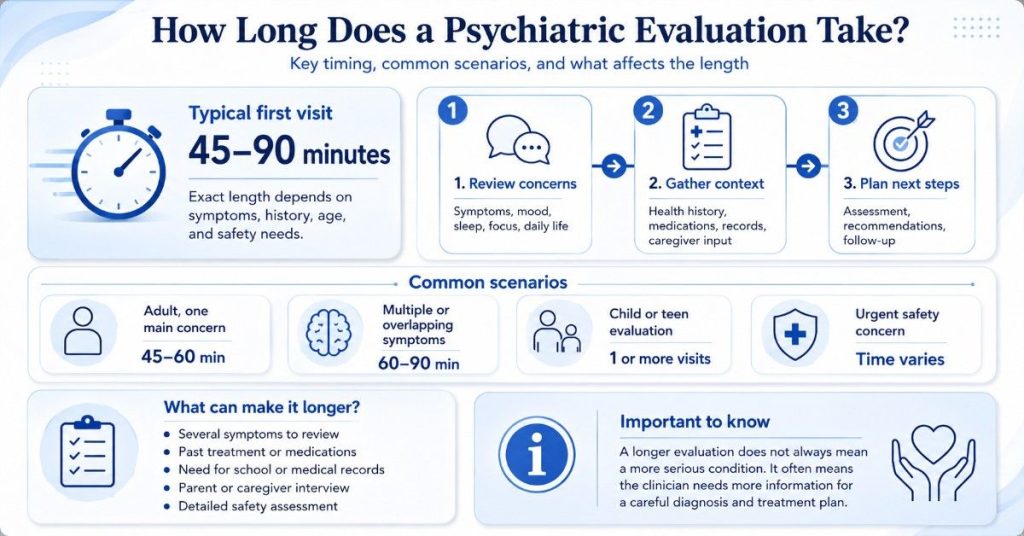
A first psychiatric evaluation often takes 45 to 90 minutes. The exact length depends on age, symptoms, medical history, safety concerns, and whether additional information is needed.
A longer appointment does not necessarily mean the condition is severe. It usually means the clinician needs more time to understand the full picture before discussing a diagnosis or treatment plan.
What Can Affect the Appointment Length?
The evaluation may take longer when the clinician needs to:
- Review several symptoms or possible conditions
- Discuss past treatment, medications, or hospital care
- Gather information from a parent or caregiver
- Review school, medical, or therapy records
- Complete a detailed safety assessment
Typical Evaluation Scenarios
| Patient scenario | Possible time needed | What may be reviewed |
| Adult with one main concern | About 45–60 minutes | Symptoms, medical history, medications, and treatment goals |
| Adult with overlapping symptoms | About 60–90 minutes | Mood, anxiety, attention, trauma, sleep, and daily functioning |
| Child or teen evaluation | One or more appointments | Development, behavior, school concerns, family history, and caregiver input |
| Complex psychiatric history | Initial visit plus follow-up | Previous diagnoses, medication response, hospital care, and medical records |
| Urgent safety concern | Based on clinical need | Self-harm risk, immediate safety, support system, and emergency planning |
Example 1: Adult With Recent Anxiety
An adult experiencing anxiety after a major life change may complete the evaluation in one visit.
The clinician may review:
- When the anxiety began
- Physical and emotional symptoms
- Sleep and daily functioning
- Medical conditions and medications
- Treatment preferences
Example 2: Teen With Several Concerns
A teen with attention problems, mood changes, and declining grades may need more than one appointment.
The evaluation may include:
- A caregiver interview
- A private conversation with the teen
- School or medical record review
- Symptom questionnaires
- A follow-up visit to discuss findings
The American Academy of Child and Adolescent Psychiatry notes that a comprehensive evaluation for a child or teen may take several hours across one or more visits.
The goal is not to rush toward a diagnosis. The clinician should gather enough information to provide a careful, individualized recommendation.
What Questions Will the Psychiatrist Ask?
The psychiatrist will ask questions to understand your symptoms, health history, daily functioning, and treatment goals. These questions are not a test, and there are no “right” answers.
You may be asked about:
- Current symptoms: When they began, how often they occur, and what makes them better or worse
- Mood and thinking: Sadness, worry, panic, irritability, unusual thoughts, or difficulty concentrating
- Daily functioning: Sleep, appetite, energy, relationships, school, work, and personal responsibilities
- Health history: Medical conditions, past diagnoses, medications, therapy, hospital care, and substance use
- Family and life experiences: Mental health history, trauma, major changes, stress, and available support
The psychiatrist may ask questions such as:
- “What brought you in today?”
- “How have these symptoms affected your daily life?”
- “Have you received mental health treatment before?”
- “What medications or supplements do you currently take?”
- “What would you like to improve through treatment?”
Why Safety Questions Are Asked
You may be asked about self-harm, suicidal thoughts, aggression, hallucinations, or whether you feel safe at home.
These are standard clinical questions. Honest answers help the psychiatrist assess your immediate needs and recommend the safest level of care.
How to Prepare Your Answers
You do not need to remember every detail. Before the appointment, consider writing down:
- Your main symptoms
- When they started
- How often they occur
- How they affect daily life
- What you hope to gain from treatment
It is acceptable to say that you do not know, need a moment, or feel uncomfortable discussing something. The psychiatrist can explain why a question matters and help you move through the evaluation at a manageable pace.
Will I Receive a Diagnosis at the First Visit?
You may receive a working diagnosis during your first appointment if your symptoms and history provide enough information.
However, a careful psychiatric evaluation may require more than one visit. This is common when symptoms overlap, have recently started, or may be related to a medical condition.
A Diagnosis May Be Delayed When:
- Several conditions could explain the same symptoms
- Medical records or laboratory results are needed
- Medication effects must be reviewed
- Parent, caregiver, or teacher input is helpful
- Symptoms need to be observed over time
For example, difficulty concentrating may be related to ADHD, anxiety, depression, poor sleep, trauma, medication effects, or a medical condition. The psychiatrist may need additional information before confirming the cause.
What Is a Working Diagnosis?
A working diagnosis is the clinician’s best initial explanation based on the available information. It helps guide early treatment but may be updated as more details become available.
The psychiatrist may recommend:
- A follow-up evaluation
- Symptom questionnaires
- Medical or laboratory testing
- Review of previous treatment records
- Input from another healthcare professional
For persistent changes in mood, focus, sleep, or daily functioning, support for adults may help clarify possible causes and appropriate treatment options.
The goal is not to assign a label quickly. It is to develop an accurate understanding of your symptoms and create a treatment plan that fits your needs.
Will Medication Be Prescribed Immediately?
Medication may be discussed, but it is not automatic. The clinician considers symptoms, diagnosis, medical history, current medications, previous treatment, risks, benefits, and your preferences.
When medication is appropriate, ask about its purpose, benefits, side effects, precautions, and follow-up. Do not stop or change it without guidance from the prescriber.
Treatment may also include psychotherapy, behavioral strategies, sleep support, school or workplace accommodations, lifestyle changes, or coordination with primary care.
You should have an opportunity to ask questions before agreeing to a treatment plan. Shared decision-making helps ensure that the plan reflects your needs, comfort level, and goals.
How Should I Prepare?
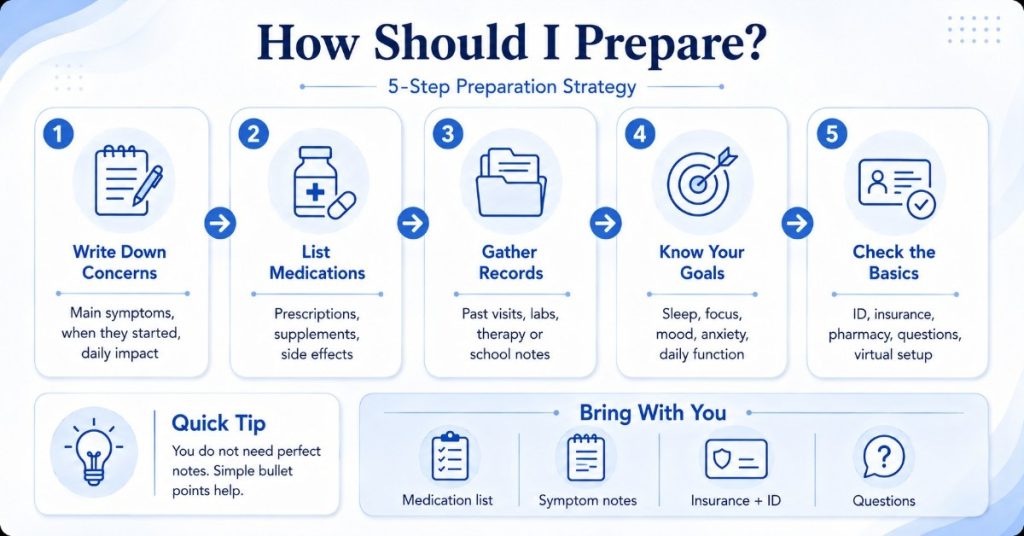
A little preparation can help you use the appointment time well. You do not need perfect records or a rehearsed explanation.
5-Step Preparation Strategy
- Write down your main concerns
Note the symptoms that led you to seek help, when they began, how often they occur, and how they affect daily life. - Prepare a medication list
Include prescription medicines, over-the-counter products, vitamins, supplements, doses, and any side effects you have noticed. - Gather relevant records
Bring previous psychiatric evaluations, hospital records, therapy notes, laboratory results, school reports, or medication history when available. - List your treatment goals
Identify what you want to improve, such as sleep, concentration, mood, anxiety, school performance, relationships, or daily functioning. - Prepare practical details
Have your identification, insurance information, pharmacy details, and emergency contact ready. For a virtual visit, test your camera, microphone, and internet connection.
What to Bring
- Medication and supplement list
- Relevant medical or mental health records
- Notes about symptoms, triggers, and patterns
- Insurance and identification information
- Questions you want to ask
Real-World Example
Suppose you have felt anxious for three months and are sleeping poorly.
Your notes might say:
- Anxiety began after a job change
- Symptoms occur most evenings
- Sleep has decreased to five hours
- Caffeine makes symptoms worse
- Your goal is to sleep better and feel calmer at work
This type of information helps the psychiatrist understand patterns more quickly.
Do not stop, start, or change medication before the appointment unless a qualified healthcare professional has advised you to do so. Bring questions about side effects, treatment options, and follow-up care so they can be discussed safely.
What Should Parents Expect for a Child or Teen?
Psychiatric evaluations for children and teens are adapted to their age, development, and communication needs. The clinician may speak with the parent and child together, then separately when appropriate.
Parents can usually expect the evaluation to cover:
- Developmental, medical, and family history
- Mood, anxiety, attention, sleep, and behavior
- School performance and social relationships
- Recent stress, trauma, or major life changes
- Safety concerns and treatment goals
Child mental health care considers how symptoms appear at home, at school, and in social settings. Input from parents, teachers, therapists, or other healthcare professionals may also support a more complete evaluation.
Teen assessments may address friendships, academic stress, substance use, privacy, and emotional safety. This teen appointment guidance can help families prepare without making the visit feel like punishment.
The CDC reported that 40% of U.S. high school students experienced persistent sadness or hopelessness in 2023, showing why timely, respectful assessment matters when emotional changes continue.
Families seeking adolescent psychiatric support should expect the clinician to balance caregiver observations with the teen’s need to feel heard, respected, and involved in treatment decisions.
Can a Psychiatric Evaluation Be Completed Online?

Many evaluations can be completed through secure video when telehealth is appropriate. Online care may reduce travel and help patients speak from a familiar environment.
A virtual visit still includes clinical questions, observation, safety screening, and planning. The clinician may recommend an office visit, physical examination, laboratory work, or emergency care when needed.
Patients should prepare relevant records, prescription information, and questions just as they would for an in-person appointment. A quiet, private location can make it easier to speak openly.
Patients may also need to provide their current physical location and an emergency contact. Technical or clinical limitations may require changing the visit format.
What Happens After the Evaluation?
The clinician may summarize the main concerns, explain a working diagnosis, and discuss a treatment plan. You should have time to ask questions and share concerns about any recommendation.
Next steps may include follow-up visits, medication management, psychotherapy, testing, school coordination, or specialist referral. The plan can change as the clinician learns more about your response.
A useful plan should be understandable, realistic, and collaborative. It should explain how progress will be monitored and what to do if symptoms worsen.
Do not hesitate to ask when follow-up is needed, how to report side effects, or who to contact with non-urgent treatment questions.
When to Seek Professional Help
Consider an evaluation when symptoms last several weeks, repeatedly return, or interfere with daily life. Common warning signs for care include major changes in mood, sleep, concentration, motivation, behavior, or relationships.
Seek professional support for:
- Persistent sadness, fear, anger, or irritability
- Declining school or work performance
- Withdrawal from people or usual activities
- Increasing substance use or risky behavior
- Difficulty managing basic responsibilities
Major sleep changes, withdrawal, declining self-care, and dramatic mood changes can indicate that professional assessment may be helpful.
Seek urgent help for suicidal thoughts, self-harm, violent thoughts, severe confusion, hallucinations, or immediate danger.
Call 911, go to the nearest emergency department, or call or text 988 in the United States. Do not wait for a routine clinic appointment during an immediate emergency.
How MD Psychiatry Clinic Supports Psychiatric Evaluations in Alpharetta

MD Psychiatry Clinic’s evaluation approach focuses on understanding your symptoms, health history, strengths, and daily challenges. The clinical team provides compassionate assessments for children, teens, and adults before recommending appropriate next steps.
Flexible MD Psychiatry Clinic care options include secure virtual appointments and in-office visits. Their team develops an individualized plan based on your needs and treatment goals.
What the clinic offers
- Comprehensive psychiatric evaluations
- Review of mood, anxiety, focus, sleep, and behavior
- Personalized treatment planning
- Medication evaluation when appropriate
- Virtual and in-office follow-up care
MD Psychiatry Clinic’s patient-focused care emphasizes respectful communication, clear recommendations, and shared decision-making.
Ready to take the next step?
Reaching out to MD Psychcliic for support can lead to meaningful improvement in emotional well-being, productivity, relationships, and daily life. ADHD and many other mental health conditions are treatable with structured, evidence-based care.
Connect with MD Psychiatry Clinic for appointment support or speak with the team directly.
Call: 770-680-2302
Email: patient@mdpsychclinic.com
Hours: Monday–Friday, 8:00 AM–5:00 PM
Location: 3235 North Point Parkway, Suite 203, Alpharetta, GA 30005
Frequently Asked Questions
1. How do I book a psychiatric evaluation online in Alpharetta, GA?
Request an appointment online or call 770-680-2302. Provide contact, insurance, and symptom information.
The office can confirm availability, visit format, current fees, and insurance participation before the appointment. Coverage and patient costs should always be confirmed directly because insurance benefits can change.
2. What if I feel anxious during a virtual psychiatric appointment?
Tell the clinician you feel nervous. You can ask for a question to be repeated, pause briefly, or keep notes nearby.
Choose a private location, use headphones, and test the video connection beforehand. You do not need to explain every concern perfectly during the first few minutes.
3. What should I bring to my first psychiatric evaluation?
Bring identification, insurance details, medication and supplement lists, relevant records, and symptom notes.
Include when symptoms started, how often they occur, what worsens them, and how they affect sleep, work, school, relationships, or daily responsibilities.
4. Can a Psychiatrist Diagnose ADHD, Anxiety, or Depression at the First Appointment?
A clinician may provide a working diagnosis when enough information is available.
Some patients need follow-up visits, rating scales, records, medical testing, or caregiver or teacher input. A careful evaluation helps identify overlapping conditions and reduces the risk of overlooking another possible cause.
5. Does a Psychiatric Evaluation Mean I Must Take Medication?
No. An evaluation identifies concerns and guides treatment planning.
Medication may be one option, but recommendations can also include psychotherapy, behavioral strategies, sleep changes, school or workplace support, medical follow-up, coordinated care, or continued monitoring.