


Living with anxiety can make even ordinary days feel harder than they should. Work gets heavier, sleep becomes less restful, and your mind may stay on alert even when nothing is wrong. When that stress keeps building, it is natural to wonder whether medication could help you feel more steady again.
For many adults in Georgia, anxiety medication is not about changing who they are. It is about lowering the constant pressure so they can think clearly, rest better, and move through life with more confidence. A psychiatrist can help decide whether medication makes sense, what type may fit best, and how to use it safely as part of a full treatment plan.
When Anxiety Medication May Be Considered
Everyone feels anxious from time to time. Anxiety becomes more concerning when it lasts for weeks, feels hard to control, or starts affecting your work, health, sleep, and relationships. In those cases, a psychiatric evaluation can help clarify what is happening and what kind of support may help most.
Anxiety disorders are very common. The National Institute of Mental Health estimates that 19.1% of U.S. adults had an anxiety disorder in the past year. Recent national data also show that 12.1% of U.S. adults regularly reported feelings of worry, nervousness, or anxiety in 2024.
Medication may be considered when anxiety:
- Feels constant or overwhelming
- Causes panic attacks
- Interferes with sleep
- Makes it hard to work or focus
- Leads to avoidance of normal activities
- Does not improve enough with stress management alone
A psychiatrist will not choose medication based on one symptom alone. They look at the full picture, including your health history, current symptoms, daily functioning, and whether another condition may be adding to the anxiety.
Who Can Prescribe Anxiety Medication in Georgia
In Georgia, psychiatrists are medical doctors who diagnose mental health conditions and prescribe medication when appropriate. They are trained to sort through symptoms carefully, which matters because anxiety can overlap with depression, trauma, OCD, insomnia, or physical health concerns.
A primary care doctor may also prescribe some anxiety medications. Still, many adults prefer a psychiatrist when symptoms are more intense, long-lasting, or difficult to manage. That added expertise can be especially helpful when medication needs close follow-up or when more than one condition may be involved.
For adults already struggling with worry, restlessness, or fear that will not let up, support from a specialist in anxiety care can make the next steps feel clearer and less overwhelming.
Common Types of Anxiety Medication a Psychiatrist May Prescribe

There is no one medication that works best for every person. The right choice depends on your symptoms, how quickly relief is needed, your past response to medication, and any other health concerns. Several medication groups are commonly used for anxiety.
SSRIs
SSRIs are often used as a first choice for ongoing anxiety treatment. They are antidepressants, but they are also widely used for anxiety disorders. These medications generally work over time rather than right away. SSRIs are commonly prescribed because they are considered effective and are often better tolerated than older medication types.
Examples may include:
- Sertraline
- Escitalopram
- Fluoxetine
- Paroxetine
These medications may help with:
- Generalized anxiety
- Panic symptoms
- Social anxiety
- Anxiety that occurs along with depression
SNRIs
SNRIs are another group often used for anxiety. Like SSRIs, they are usually meant for ongoing treatment rather than quick relief. They may be considered when symptoms are persistent or when a person also has low mood, pain, or low energy.
Examples may include:
- Venlafaxine
- Duloxetine
A psychiatrist will explain how this type compares with an SSRI and whether one may fit your symptoms better.
Benzodiazepines
Benzodiazepines can work quickly and may reduce severe anxiety in the short term. Because of their speed, they are sometimes used when symptoms feel intense or disabling. However, they are usually prescribed carefully and for limited periods because long-term use can lead to tolerance, dependence, or withdrawal problems.
Examples may include:
- Lorazepam
- Clonazepam
- Alprazolam
These medications are not right for everyone. A psychiatrist will consider your history, lifestyle, and risk factors before prescribing them.
Buspirone
Buspirone is another prescription option used for anxiety. It does not work as fast as a benzodiazepine, but it may be used on an ongoing basis. For some adults, it can be a helpful choice when the goal is steady symptom control without the same dependence concerns seen with some short-acting anxiety medications.
Beta-Blockers
Beta-blockers are not used for every kind of anxiety. They are more often used for physical symptoms such as shaking, sweating, or a racing heartbeat in specific situations. A psychiatrist may consider them for performance-related anxiety or occasional anxiety in triggering settings.
Quick Comparison of Common Anxiety Medications
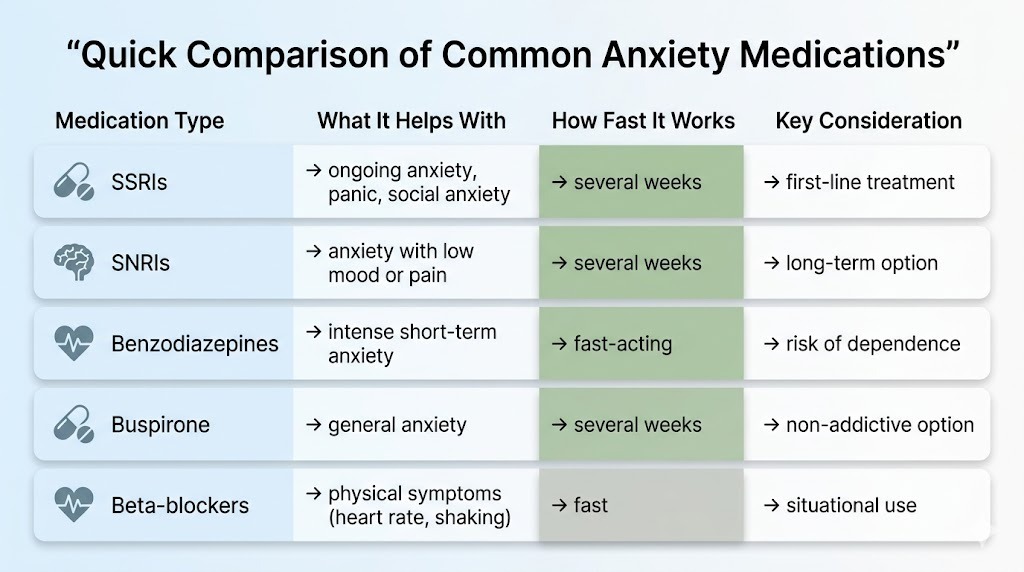
| Medication Type | What It May Help With | How Fast It Works | Key Consideration |
| SSRIs | Ongoing anxiety, panic, social anxiety | Several weeks | Often used as a first-line option |
| SNRIs | Ongoing anxiety, sometimes with low mood or pain | Several weeks | Another common long-term option |
| Benzodiazepines | Intense short-term anxiety or panic | Often quickly | Dependence risk with long-term use |
| Buspirone | General anxiety symptoms | Several weeks | May be used for ongoing treatment |
| Beta-blockers | Physical anxiety symptoms in specific situations | Often quickly | Usually used for situational symptoms |
How a Psychiatrist Decides What to Prescribe
Good anxiety treatment is personal. A psychiatrist does not simply match a medication to a diagnosis. They look at how anxiety shows up in your body, thoughts, habits, and daily routines.
During an evaluation, they may consider:
- How long symptoms have lasted
- Whether panic attacks are present
- Sleep quality and fatigue
- Past medication history
- Depression, OCD, trauma, or substance use
- Medical conditions and other prescriptions
- Pregnancy planning or other life factors
For some adults, anxiety is tied closely to poor sleep, racing thoughts at night, or exhaustion during the day. When that pattern is present, addressing related concerns through sleep support may also be part of the treatment plan.
If repeated fears, mental rituals, or intrusive thoughts are part of the picture, a psychiatrist may also look more closely at OCD symptoms. In that case, care connected to OCD treatment may matter alongside anxiety treatment.
What to Expect When Starting Anxiety Medication

Starting medication can bring relief, but it also requires patience. Some medications begin helping only after a few weeks. Others may help sooner but are not designed for long-term daily use. Your psychiatrist should explain what to expect so the process feels less uncertain.
Common early experiences may include:
- Mild stomach upset
- Headache
- Changes in sleep
- Temporary restlessness
- Dry mouth
- Mild dizziness
Not everyone has side effects, and many improve with time. The most important step is staying in touch with your prescribing doctor rather than stopping suddenly on your own.
Early Follow-Up Matters
Medication management is not a one-time event. A psychiatrist may need to adjust the dose, switch to another option, or combine medication with therapy based on how you respond. Small changes can make a meaningful difference.
That is one reason many adults value access to virtual psychiatric care when regular follow-up is needed across busy schedules and long Georgia commutes.
Medication Is Often One Part of Treatment
Medication can lower the volume of anxiety, but it usually works best when paired with other support. Many people do better when treatment also helps them understand triggers, change thought patterns, and build daily coping skills.
A full treatment plan may include:
- Psychiatric evaluation
- Medication management
- Therapy
- Sleep improvement
- Stress reduction habits
- Ongoing follow-up
For some people, medication gives enough relief to restart routines they had been avoiding. For others, it creates a calmer base so therapy becomes more effective.
Signs It May Be Time to See a Psychiatrist
Some anxiety improves with time, rest, or lifestyle changes. Some does not. When symptoms keep growing or start limiting your life, it may be time to get expert help.
You may benefit from psychiatric care if:
- You feel anxious most days
- Your sleep is regularly disrupted
- You avoid driving, meetings, crowds, or travel
- Your heart races or you feel panicky without clear reason
- Worry affects work or family life
- You have tried coping tools and still feel stuck
Many adults wait longer than they need to because they think they should handle it alone. In reality, persistent anxiety is a health issue, not a personal failure. These warning signs often show when professional support is worth considering.
Anxiety Medication and Online Appointments in Georgia
For many adults, convenience plays a big role in getting care started. If daily life already feels overloaded, driving across town for every visit can make treatment harder to maintain. That is why telepsychiatry has become an important option for anxiety care.
Online psychiatric visits may help when:
- Travel time is a barrier
- Work hours are tight
- Anxiety makes leaving home harder
- You want follow-up visits to feel easier
For adults ready to move forward, the process of booking online care can be simple and private.
Questions to Ask Before Starting Anxiety Medication
A first appointment often feels easier when you know what to ask. Simple questions can help you feel more informed and more in control.
Consider asking:
- What type of anxiety do you think I have?
- Why do you recommend this medication?
- How long may it take to work?
- What side effects should I watch for?
- Will it affect sleep, focus, or appetite?
- How often will we follow up?
- How should I stop it if needed later?
Clear answers matter. Anxiety treatment should feel collaborative, not confusing.
Safety and Long-Term Considerations
The goal of anxiety medication is not just short-term relief. It is safer, steadier functioning over time. Your psychiatrist should talk through benefits, side effects, timing, and whether a medication is meant for short-term support or longer use.
A few key points are worth remembering:
- Some medications need time to build effect
- Some should not be stopped suddenly
- Some are better for daily control
- Some are better for limited short-term use
- Follow-up is part of safe care
When treatment is monitored well, medication can become one useful part of a broader plan that helps you feel more present, more rested, and more able to handle life.
How MD Psych Clinic Supports Adults Across Georgia

Adults across Georgia often need mental health care that feels skilled, personal, and practical. At MD Psych Clinic, treatment is built around understanding the full picture, not just handing out a prescription.
Under the care of Dr. Zehra Erdeve Temiz, adults can receive thoughtful psychiatric evaluation and medication management designed around real-life needs. That includes support for anxiety that affects work, relationships, sleep, and daily confidence.
MD Psych Clinic supports adults across Georgia with:
- Personalized psychiatric evaluations
- Anxiety medication management
- Ongoing follow-up and dose adjustments
- Telepsychiatry appointments for statewide access
- Care for related concerns such as OCD and sleep problems
The clinic is located at 3235 North Point Parkway, Suite 203, Alpharetta, GA 30005, near the North Point area and convenient for adults in Alpharetta and nearby communities.
For those coming from around North Fulton, the location offers easy access while still allowing privacy and professional support.
MD Psychiatry Clinic
📞 Call: 770-680-2302
📧 Email: hello@mdpsychclinic.com
Hours: Monday–Friday, 8:00 AM – 5:00 PM
Location: 3235 North Point Parkway, Suite 203 Alpharetta, GA 30005
When anxiety keeps shaping your days, getting the right support can change more than symptoms. It can help you feel like yourself again, with a plan that is clear, safe, and built for lasting progress.
FAQs
• Can I get anxiety medication on my first psychiatrist visit?
Yes, in many cases. If your symptoms are clear and no major risks are present, a psychiatrist may prescribe medication during the first visit after a proper evaluation.
• How long does anxiety medication take to start working?
- Most daily medications (like SSRIs) take 2–6 weeks to show full effects
- Some fast-acting options may work within hours but are usually short-term
• Are anxiety medications addictive?
- Not all medications are addictive
- SSRIs and SNRIs are non-addictive
- Some fast-acting medications (like benzodiazepines) may carry dependence risk if used long-term
• What if the first medication doesn’t work for me?
That is common. Psychiatrists often adjust the dose or switch medications to find the best fit based on your response and side effects.
• Do I have to take anxiety medication forever?
No. Many people use medication for a period of time and gradually stop under medical guidance once symptoms improve and coping skills are stronger.