
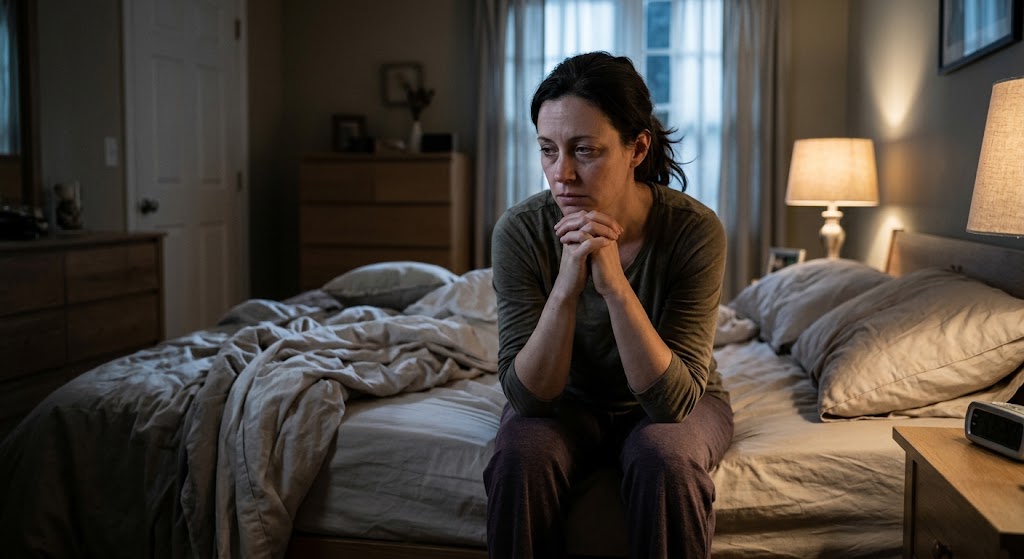

Sleep should feel restorative. After trauma, however, bedtime can become the moment when fear, memories, and physical alertness feel strongest.
VA research reports clinically significant insomnia in 92% of active-duty service members with PTSD, compared with 28% of those without PTSD.
PTSD-related sleep problems are not a weakness. They reflect how the brain and nervous system respond to danger and memory. Treatment can address both trauma symptoms and disrupted sleep.
What Is the Connection Between PTSD and Sleep?
Post-traumatic stress disorder can develop after experiencing or witnessing trauma. Symptoms may include intrusive memories, avoidance, negative mood changes, hypervigilance, nightmares, and difficulty falling or staying asleep.
Sleep problems may begin soon after trauma or appear later. Some people wake at small sounds. Others delay bedtime because they fear nightmares or feel unsafe while resting.
Individualized PTSD treatment options may address trauma symptoms, sleep disruption, anxiety, depression, and daily functioning together.
Why Does Trauma Cause Nightmares?
During sleep, the brain continues processing emotions and memories. Trauma can disrupt that process, causing distressing dreams that repeat the event or recreate its fear, helplessness, danger, or loss.
PTSD nightmares may replay the event or carry similar emotions. A person may wake sweating, breathing quickly, confused, or afraid to return to sleep.
A VA-reviewed community study found that 71% of people with PTSD reported nightmares.
Nightmares can create a learned fear of bedtime. Avoiding sleep may feel protective, but sleep loss can increase irritability, poor concentration, and emotional reactivity.
People who feel anxious as bedtime approaches may benefit from structured sleep anxiety support that addresses nighttime fear and related psychiatric symptoms.
Why Does PTSD Cause Insomnia?
PTSD often keeps the body’s threat system activated. Even in a safe room, the nervous system may remain prepared to detect danger. This state is called hyperarousal.
Hyperarousal can cause a racing heart, tense muscles, rapid thoughts, startle responses, and sound sensitivity. These symptoms make restful sleep difficult.
Avoidance also contributes. A person may stay awake intentionally, use a phone for hours, sleep with lights on, or avoid the bedroom. These habits may provide short-term relief while reinforcing insomnia.
Nightmares can cause repeated awakenings. Trauma memories or fear may then prevent sleep from returning. Early-morning waking may also leave the person exhausted but unable to rest.
Professional Georgia sleep treatment can evaluate psychiatric, behavioral, medication-related, and medical causes instead of assuming every sleep problem comes from PTSD.
Common Signs of PTSD-Related Sleep Problems
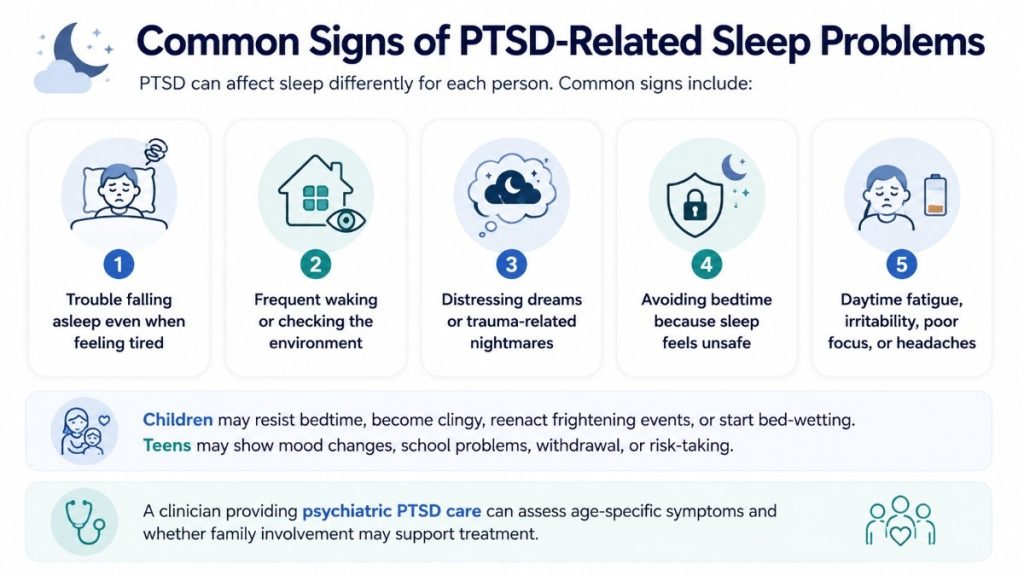
PTSD can affect sleep differently for each person. Common signs include:
- Trouble falling asleep despite feeling tired
- Frequent waking or checking the environment
- Distressing dreams or trauma-related nightmares
- Avoiding bedtime because sleep feels unsafe
- Daytime fatigue, irritability, poor focus, or headaches
Children may resist bedtime, become clingy, reenact frightening events, or start bed-wetting. Teens may show mood changes, school problems, withdrawal, or risk-taking.
A clinician providing psychiatric PTSD care can assess age-specific symptoms and whether family involvement may support treatment.
Nightmares, Insomnia, and Other Sleep Conditions
Not every nighttime symptom has the same cause. A careful evaluation helps identify whether PTSD, another sleep disorder, medication, substance use, or a medical condition is contributing.
| Sleep concern | What it may look like | Why evaluation matters |
| PTSD nightmares | Vivid dreams with trauma themes | May need trauma- and nightmare-focused care |
| Insomnia | Trouble falling or staying asleep | Can become an independent condition requiring CBT-I |
| Night terrors | Screaming or movement with limited recall | Differ from remembered nightmares |
| Sleep apnea | Snoring, gasping, breathing pauses | May require a sleep study |
| Restless sleep | Leg discomfort or repeated movement | May have medical or medication-related causes |
PTSD can occur alongside common sleep disorders. Loud snoring, choking, breathing pauses, severe daytime sleepiness, or drowsy driving should not be explained as anxiety without medical assessment.
How PTSD Sleep Problems Affect Daily Life
Poor sleep can intensify trauma symptoms. Fatigue may reduce concentration, memory, and emotional control, making work, school, driving, and relationships harder.
Some people use alcohol, cannabis, sedating medicines, or excessive caffeine to cope. These approaches may worsen sleep quality, create dependence risks, or interact with prescribed treatment.
Overlapping symptoms require careful diagnosis. For adults with lifelong social, communication, or sensory differences, separate adult autism evaluations may clarify needs without assuming every difficulty is caused by trauma.
Evidence-Based Treatment for PTSD Nightmares and Insomnia
Treatment should be individualized. A clinician may assess trauma history, sleep patterns, nightmares, medical conditions, medications, substance use, mood symptoms, and safety before recommending care.
Trauma-Focused Psychotherapy
Evidence-based PTSD psychotherapy may include cognitive processing therapy, prolonged exposure, or other trauma-focused approaches. These treatments help patients process trauma memories, reduce avoidance, and change beliefs that keep the danger response active.
Treatment should move at an appropriate pace. A qualified professional can explain privacy, consent, goals, and choices before therapy begins.
Cognitive Behavioral Therapy for Insomnia
Cognitive behavioral therapy for insomnia, or CBT-I, is the recommended first-line treatment for chronic insomnia. It may include stimulus control, sleep scheduling, cognitive restructuring, relaxation, and healthy sleep habits.
CBT-I is more structured than general sleep-hygiene advice. Because PTSD and insomnia affect each other, timing with trauma-focused therapy should be guided by trained clinicians.
Nightmare-Focused Treatment
Imagery rehearsal therapy helps a patient rewrite a recurring nightmare with a safer or less distressing ending, then practice the revised dream while awake. It is a recommended treatment for nightmare disorder and PTSD-related nightmares.
Medication Management
Medication may help some people. A qualified prescriber should review benefits, risks, side effects, other medicines, medical history, age, and pregnancy status.Medication is not required for every patient. Never start, stop, combine, or change psychiatric or sleep medication without medical guidance.
NIMH notes that medication may address specific PTSD symptoms, including sleep problems and nightmares.
What Can Help While You Wait for an Appointment?

These steps do not replace treatment, but they may reduce sleep disruption:
- Keep a consistent wake time, including weekends
- Use a calming, predictable wind-down routine
- Limit alcohol, nicotine, caffeine, and late-night screen use
- Leave bed briefly when prolonged wakefulness increases frustration
- Record sleep, nightmares, medicines, and triggers for your clinician
Avoid processing trauma alone at bedtime. Grounding may help, such as naming visible objects or reminding yourself of the current date and location.
When to Seek Professional Help
Seek an evaluation when nightmares or insomnia last several weeks, worsen, or interfere with work, school, relationships, driving, or health. Earlier support is appropriate when bedtime fear causes repeated sleep avoidance.
Prompt help is important for panic, severe depression, increasing substance use, aggressive behavior, unsafe driving, or thoughts of self-harm.
If you cannot stay safe, call 911 or go to the nearest emergency department.
A psychiatric evaluation may also identify depression, anxiety, medication effects, sleep apnea, or another condition needing separate care.
How MD Psychiatry Clinic Helps

PTSD is treatable, and structured care can lead to meaningful improvement in emotional well-being, sleep, productivity, and daily life.
MD Psychiatry Clinic provides systematic, evidence-based PTSD evaluation and treatment through online mental health care and in-office services across Georgia.
The clinic offers virtual care statewide and in-person appointments in Alpharetta.
- Georgia residents can access virtual psychiatric care through MD Psychclinic without routine travel to Alpharetta.
- The clinic’s mental health services support PTSD and related concerns through individualized evaluation and follow-up.
- Patients can review the psychiatric care team when choosing a provider.
- The clinic care approach emphasizes accessible, evidence-based, compassionate support.
- Patients can schedule an appointment for virtual or in-office care.
Call: 770-680-2302
Email: patient@mdpsychclinic.com
Hours: Monday–Friday, 8:00 AM–5:00 PM
Frequently Asked Questions
1. Can PTSD Cause Nightmares Every Night?
Yes. PTSD can cause frequent nightmares, though patterns vary. Dreams may replay trauma or carry similar fear.
Nightmares that impair daytime functioning deserve evaluation because targeted psychotherapy, sleep treatment, or medication may help.
2. Why Am I Afraid to Sleep After Trauma?
Your brain may connect sleep with nightmares, reduced awareness, or feeling unable to protect yourself. This learned danger response can cause bedtime anxiety and sleep avoidance.
Treatment can help restore safety without judging the coping strategies you developed.
3. What Treatment Works for PTSD Insomnia and Nightmares?
Treatment may combine trauma-focused psychotherapy, CBT-I for chronic insomnia, imagery rehearsal therapy for nightmares, and medication when appropriate.
The best plan depends on symptoms, health history, other conditions, current medicines, and personal preferences.
4. Can I Book Online PTSD Treatment Anywhere in Georgia?
MD Psychiatry Clinic offers secure virtual psychiatric appointments for patients across Georgia, subject to clinical suitability and scheduling.
Online visits can reduce travel, privacy, childcare, or mobility barriers while supporting evaluation, medication management, and follow-up care.
5. What Happens During a Virtual Appointment for PTSD Sleep Problems?
The clinician may review trauma symptoms, nightmares, sleep timing, daytime impairment, medical history, medications, substance use, and treatment goals.
You can attend from a private Georgia location with reliable internet. Recommendations are personalized after the evaluation.