


Living with constant worry, poor sleep, or a sense that danger is always nearby can be exhausting. PTSD and anxiety can feel similar, but they do not develop in the same way and may require different types of care.
The World Health Organization reports that anxiety disorders affected 359 million people worldwide in 2021, making them the most common mental disorders.
Understanding the differences between PTSD and anxiety can help you recognize patterns, explain symptoms more clearly, and take the next step toward appropriate care. A proper evaluation can help determine whether your symptoms are related to PTSD, an anxiety disorder, a sleep condition, or a combination of concerns.
Are PTSD and Anxiety the Same?
No. PTSD is a trauma- and stressor-related disorder that can develop after exposure to actual or threatened death, serious injury, sexual violence, or another qualifying traumatic event.
Anxiety disorders involve excessive fear, worry, or avoidance. Trauma is not required for generalized anxiety disorder, panic disorder, social anxiety disorder, or specific phobias.
PTSD may include anxiety, but it also involves trauma-linked intrusion, avoidance, mood or thinking changes, and heightened arousal. A person can have PTSD and a separate anxiety disorder together.
Georgia patients can review PTSD treatment options while arranging a professional assessment.
PTSD vs. Anxiety at a Glance
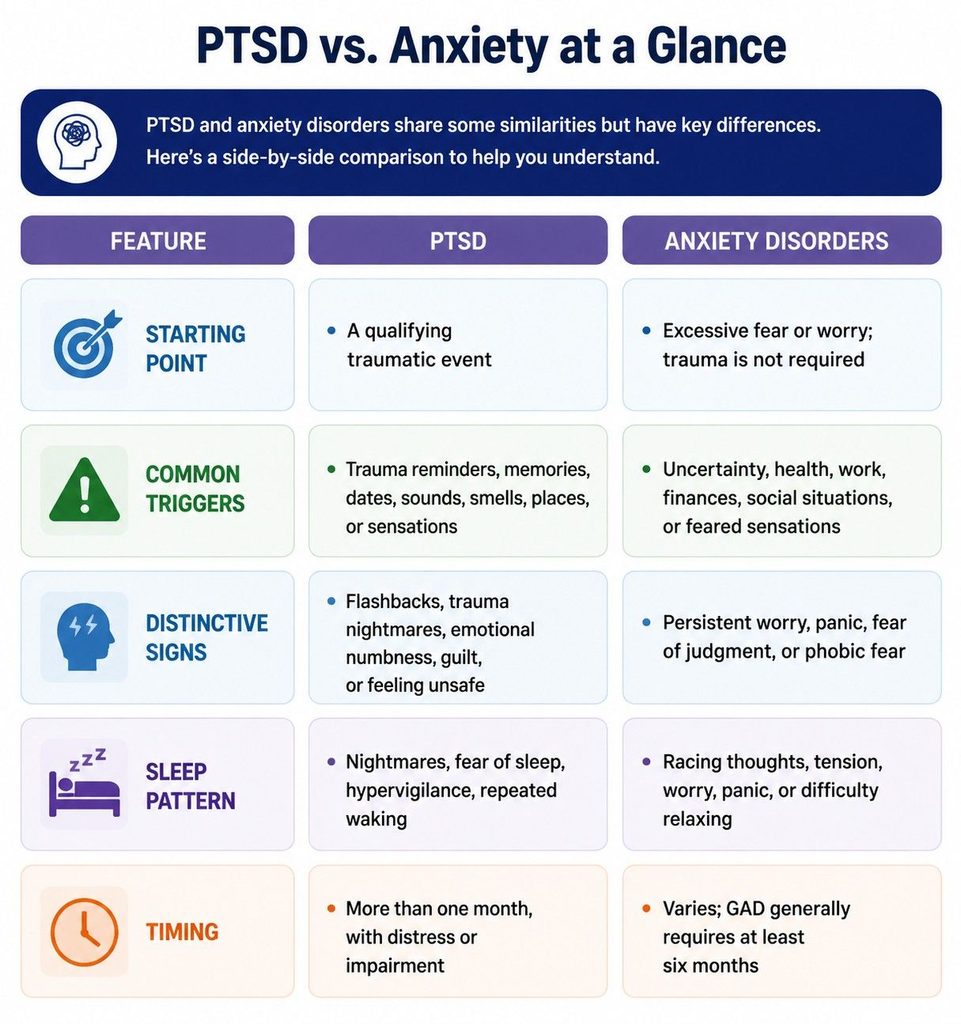
| Feature | PTSD | Anxiety disorders |
| Starting point | A qualifying traumatic event | Excessive fear or worry; trauma is not required |
| Common triggers | Trauma reminders, memories, dates, sounds, smells, places, or sensations | Uncertainty, health, work, finances, social situations, or feared sensations |
| Distinctive signs | Flashbacks, trauma nightmares, emotional numbness, guilt, or feeling unsafe | Persistent worry, panic, fear of judgment, or phobic fear |
| Sleep pattern | Nightmares, fear of sleep, hypervigilance, repeated waking | Racing thoughts, tension, worry, panic, or difficulty relaxing |
| Timing | More than one month, with distress or impairment | Varies; GAD generally requires at least six months |
Diagnosis requires a clinical interview covering trauma history, duration, impairment, medical factors, medication, substance use, sleep, and safety.
Common PTSD Symptoms
The World Health Organization estimates that 3.9% of the global population has experienced PTSD at some point in life.
PTSD symptoms fall into four main areas:
- Intrusion, including unwanted memories, flashbacks, or distressing dreams
- Avoidance of trauma-related thoughts, conversations, people, or places
- Negative changes in mood, beliefs, memory, interest, or connection
- Hyperarousal, including irritability, poor sleep, startling, or constant alertness
Children may reenact trauma in play, become clingy, regress, or develop new fears. Teens may show withdrawal, anger, risky behavior, school problems, nightmares, or poor concentration.
Common Anxiety Symptoms
Anxiety varies by diagnosis. Generalized anxiety involves broad worry, panic disorder involves sudden fear, social anxiety centers on judgment, and phobias involve a specific object or situation.
Common symptoms include:
- Excessive worry that feels difficult to control
- Restlessness, irritability, muscle tension, or fatigue
- Rapid heartbeat, sweating, trembling, nausea, or shortness of breath
- Trouble concentrating or feeling mentally blank
- Difficulty falling asleep, staying asleep, or feeling rested
Anxiety may be a disorder when fear or worry is persistent, out of proportion, difficult to control, and disruptive to school, work, relationships, sleep, or responsibilities.
Why Does PTSD Cause Nightmares?

PTSD nightmares are a form of re-experiencing. They may replay trauma directly or contain related themes, emotions, sounds, images, or sensations.
After trauma, the nervous system may keep responding as though danger is nearby. During sleep, trauma memories and fear responses may become active, causing vivid dreams and abrupt waking with fear, sweating, confusion, or a racing heart.
Some people begin fearing bedtime because sleep feels unsafe. Avoidance reduces sleep and may worsen irritability, concentration, and emotional sensitivity.
Targeted psychiatric PTSD support can assess whether nightmares relate to PTSD, medication, another psychiatric condition, or a separate sleep problem.
Why Does PTSD Cause Insomnia?
PTSD can keep the body in hyperarousal. A person may scan for danger, startle at small noises, check doors repeatedly, or struggle to relax.
Nightmares may make returning to sleep difficult. Some people delay bedtime, keep lights or television on, or use substances to avoid distress. These habits may give brief relief while worsening sleep quality.
Insomnia can continue even when other symptoms improve. A sleep-focused assessment can determine whether specialized sleep treatment belongs in the care plan.
How Anxiety Affects Sleep
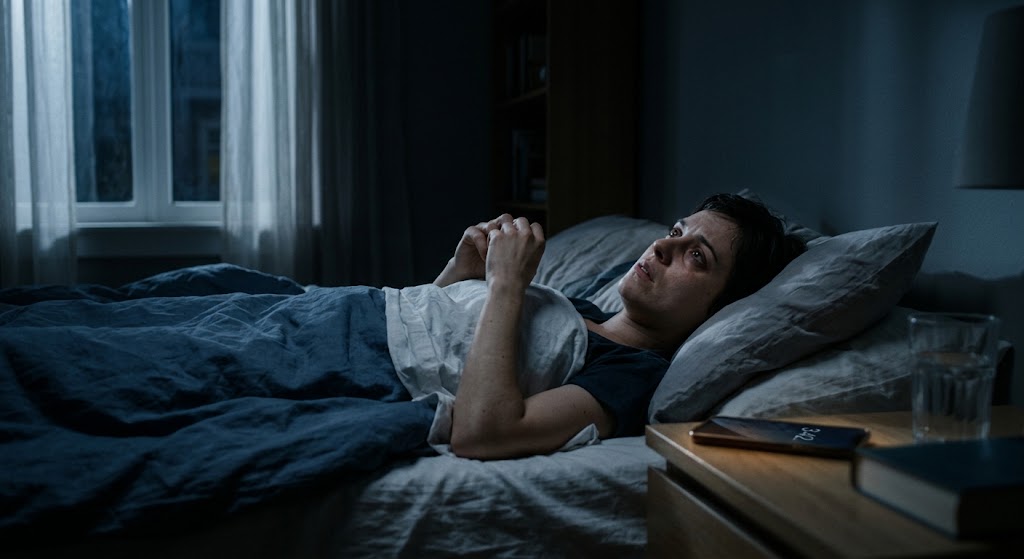
Anxiety-related insomnia is often driven by worry, physical tension, uncertainty, or fear about not sleeping. A person may review problems, predict negative outcomes, monitor body sensations, or watch the clock.
Unlike classic PTSD nightmares, anxiety dreams may not repeat a specific trauma. However, both conditions can occur together, producing trauma nightmares and broad nighttime worry.
Patients who become tense or fearful near bedtime may benefit from focused sleep anxiety care after medical and sleep-related causes are considered.
PTSD Triggers vs. Anxiety Triggers
PTSD triggers connect to trauma. A smell, voice, anniversary, touch, location, procedure, or conflict may activate memories and a survival response.
Anxiety triggers are broader. They may include deadlines, money, health, separation, crowds, driving, public speaking, social judgment, or physical sensations linked with panic.
A trigger does not confirm a diagnosis. Clinicians examine the feared outcome, trauma memories, symptom duration, avoidance, and effects on daily life.
Key Diagnostic Differences
PTSD requires a qualifying trauma, symptoms from four clusters, duration longer than one month, significant distress or impairment, and consideration of other causes.
Generalized anxiety disorder usually involves difficult-to-control worry on most days for at least six months, plus symptoms such as restlessness, fatigue, poor concentration, irritability, muscle tension, or disturbed sleep.
Other anxiety disorders have different criteria. Panic disorder centers on recurring unexpected panic attacks. Social anxiety involves marked fear of negative evaluation. Specific phobias involve intense fear tied to a particular object or situation.
What Else Can Look Like PTSD or Anxiety?
Sleep apnea, thyroid problems, medication effects, substance use, depression, OCD, ADHD, and sleep disorders may cause or worsen similar symptoms.
Snoring, gasping, breathing pauses, unusual movements, or severe daytime sleepiness may indicate underlying sleep disorders requiring medical or sleep-specialist evaluation.
When sensory, communication, or social differences have existed since childhood, an online autism assessment may clarify lifelong patterns that overlap with anxiety or trauma responses.
PTSD can also occur with anxiety, depression, substance-related problems, and sleep disorders. A coordinated plan may address trauma, anxiety, sleep, physical health, and functioning together.
Treatment Options for PTSD and Anxiety
Care may include psychotherapy, medication, sleep treatment, or a combination based on diagnosis, severity, medical history, preferences, safety, and previous response.
| Need | Common evidence-based approach |
| Core PTSD symptoms | Trauma-focused psychotherapy, including CPT, prolonged exposure, or EMDR |
| General anxiety | CBT, exposure-based methods, coping skills, and medication when appropriate |
| Chronic insomnia | CBT-I and assessment of behaviors or conditions disrupting sleep |
| Trauma nightmares | Trauma treatment plus a focused nightmare or medication evaluation |
| Follow-up | Review of symptoms, sleep, functioning, and side effects |
The 2023 VA/DoD guideline recommends CPT, prolonged exposure, and EMDR among the most effective PTSD treatments. Medication may be considered when appropriate, including when therapy is unavailable, not preferred, or co-occurring symptoms need treatment.
CBT-based treatments have strong evidence for anxiety disorders and may be delivered in person or online. Medication decisions require evaluation and discussion of benefits, side effects, interactions, and monitoring.
When to Seek Professional Help
Seek an evaluation when nightmares, worry, panic, avoidance, or poor sleep lasts several weeks, worsens, or interferes with work, school, parenting, relationships, driving, or health.
Help is especially important after trauma, when sleep feels unsafe, substances are used to cope, or a child’s behavior changes significantly.
Reaching out for support can be an important first step. PTSD and anxiety are treatable conditions, and structured care can lead to meaningful improvement in emotional well-being, productivity, sleep, and daily life.
Seek urgent care for suicidal thoughts, self-harm, threats to others, severe confusion, inability to stay safe, or possible medical emergencies. In the United States, call 911 or call or text 988.
How MD Psychiatry Clinic Helps

MD Psychclinic provides evidence-based psychiatric evaluation and treatment through online mental health care across Georgia and in-office appointments in Alpharetta. Care can address PTSD, anxiety, nightmares, insomnia, medication needs, and related conditions.
Patients can review available mental health services before scheduling an evaluation.
Patients choosing a provider can review our specialized psychiatric team and consider the clinician whose experience fits their needs.
Patients and families can meet our specialist team and learn about the clinic’s patient-focused approach.
For booking questions, contact MD Psychclinic support team during office hours.
Call: 770-680-2302
Email: patient@mdpsychclinic.com
Hours: Monday–Friday, 8:00 AM–5:00 PM
Frequently Asked Questions
1. How can I tell whether nightmares come from PTSD or anxiety?
PTSD nightmares often connect to trauma through direct replay, related themes, or intense emotions. Anxiety dreams may center on everyday worries. An evaluation can assess trauma exposure, symptoms, sleep patterns, medication, and other causes.
2. Can anxiety cause nightmares and insomnia without PTSD?
Yes. Anxiety can cause racing thoughts, tension, fear of losing control, and worry about sleep. PTSD becomes more likely when nightmares occur with trauma-linked memories, avoidance, negative mood changes, and hyperarousal.
3. What is the main diagnostic difference between PTSD and generalized anxiety disorder?
PTSD requires qualifying trauma and trauma-related symptom clusters lasting longer than one month. Generalized anxiety disorder does not require trauma and usually involves difficult-to-control worry across several life areas for at least six months.
4. Can I book an online PTSD or anxiety appointment from anywhere in Georgia?
MD Psychiatry Clinic offers virtual psychiatric appointments across Georgia, subject to clinical suitability and scheduling requirements. Online care can reduce travel and simplify follow-up for people balancing work, school, caregiving, mobility concerns, or limited transportation.
5. What happens during a virtual PTSD or anxiety evaluation?
The clinician may review symptoms, trauma history, sleep, medication, medical conditions, substance use, functioning, and safety. Recommendations may include therapy referrals, medication management, sleep strategies, or follow-up care.