
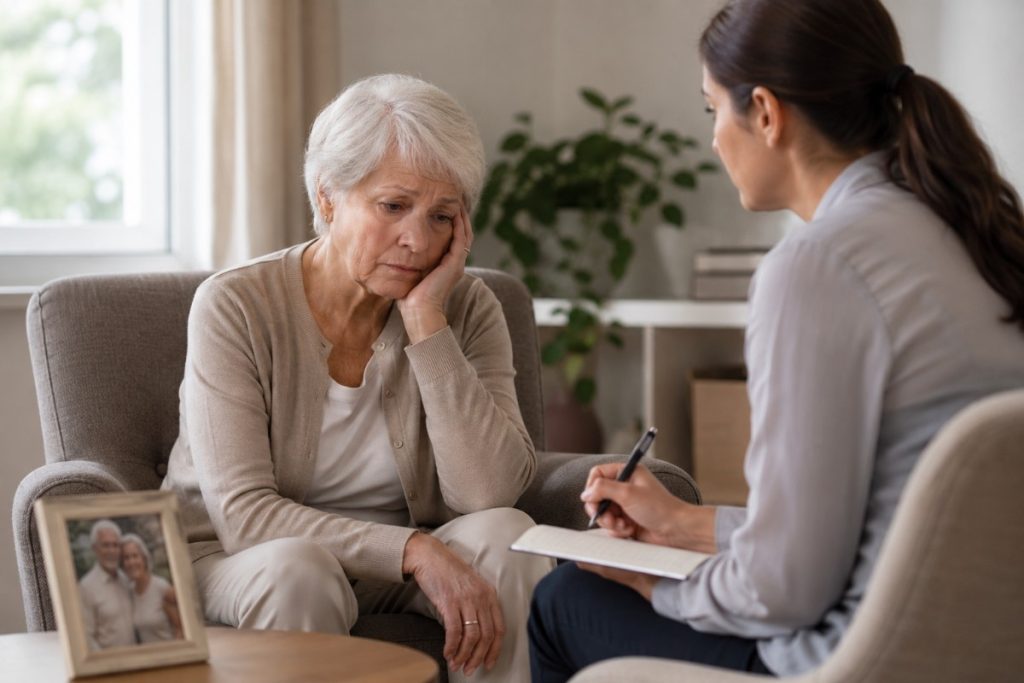

Losing a spouse, sibling, friend, home, health, independence, or familiar routine can bring sadness, fear, anger, numbness, and loneliness.
These reactions may be part of natural grief. Closer attention is needed when emotional pain remains overwhelming, daily functioning declines, or symptoms begin to resemble depression or an anxiety disorder.
The World Health Organization estimates that approximately 15% of adults age 70 and older live with a mental disorder, most commonly depression or anxiety.
Grief counseling for seniors in Georgia can help older adults process loss, rebuild routines, and identify symptoms that may require psychiatric care without treating normal grief as an illness.
When Does Grief Need Professional Care?
Professional support may be appropriate when grief causes persistent hopelessness, severe worry, panic, withdrawal, major sleep or appetite changes, poor self-care, or difficulty managing everyday responsibilities.
A clinician can assess grief, depression, anxiety, medication effects, cognitive changes, and medical conditions with similar symptoms.
Access to timely adult mental health care can help seniors and families understand what is happening and choose an appropriate next step.
Why Grief Can Be Especially Difficult for Seniors
Older adults may experience several losses close together. A spouse may die, friends may become ill, adult children may move away, and physical limitations may reduce independence.
Retirement can change identity, purpose, income, and social contact. Moving from a longtime home or giving up driving may feel like another major loss.
Pain, fatigue, hearing loss, medication effects, and limited mobility can also increase isolation and complicate grieving.
The CDC reports that nearly one-quarter of older adults experience social isolation, a factor associated with poorer emotional and physical well-being.
What Normal Grief May Look Like
Grief has no fixed timeline. Feelings may rise and fall around holidays, anniversaries, or reminders of the person who died.
Common grief reactions include:
- Waves of sadness or crying
- Longing for the person or former life
- Temporary sleep or appetite changes
- Reduced concentration and motivation
- Moments of comfort mixed with pain
A grieving senior may still experience connection, humor, or comfort between difficult moments. Improvement is rarely steady, but daily life may gradually become more manageable.
Grief, Depression, and Anxiety: Key Differences
Grief, depression, and anxiety can overlap. Assessment considers symptoms, severity, health history, medications, safety, and daily functioning.
| Concern | Common pattern | Possible warning signs |
|---|---|---|
| Grief | Pain often comes in waves and connects to the loss | Distress remains disabling or steadily worsens |
| Depression | Low mood or loss of interest affects most areas of life | Hopelessness, worthlessness, poor self-care, or suicidal thoughts |
| Anxiety | Worry, fear, tension, or avoidance becomes difficult to control | Panic, severe insomnia, reassurance seeking, or inability to leave home |
| Prolonged grief | Intense yearning and preoccupation remain persistent | The person feels unable to reengage with life or accept the loss |
Only a qualified clinician can diagnose a mental health condition. Medical review is also important because illness, pain, sleep disorders, dementia, and medication reactions can affect mood or behavior.
Signs Grief May Be Becoming Depression
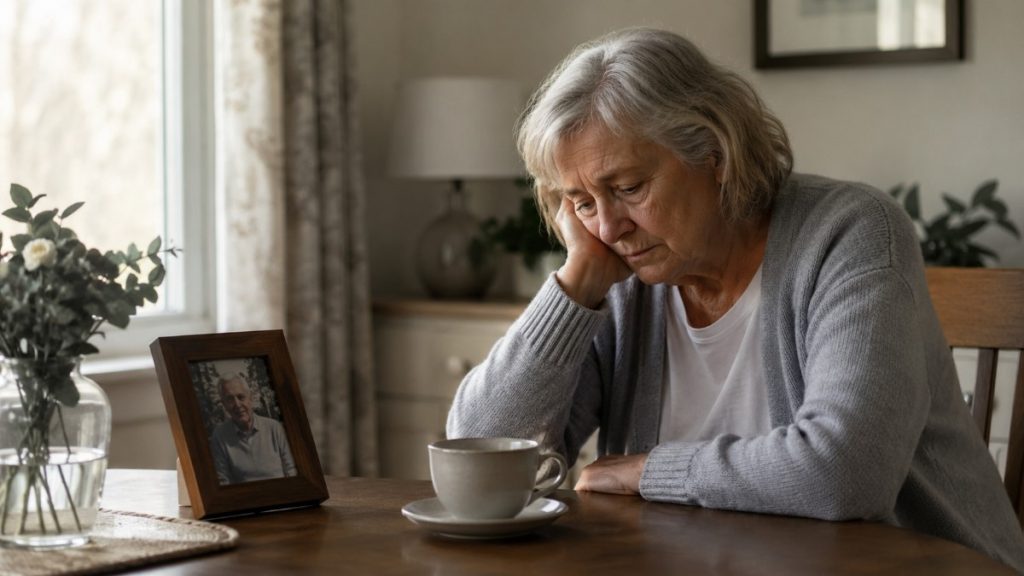
Depression is not an unavoidable part of aging. It may develop after bereavement, especially with limited support, previous depression, chronic illness, or several recent losses.
Possible signs include:
- Sadness, emptiness, or irritability most days
- Loss of interest in nearly all activities
- Feelings of worthlessness, guilt, or hopelessness
- Significant changes in sleep, appetite, or energy
- Neglect of hygiene, medications, meals, or appointments
Professional depression treatment support may be appropriate when these changes continue, intensify, or interfere with safety and daily functioning.
Some seniors describe fatigue, memory trouble, body pain, or loss of purpose rather than saying they feel depressed.
Signs Grief May Be Triggering Anxiety
Loss can make the world feel unsafe. A senior may fear illness, living alone, falling, burdening family, or losing the ability to manage daily responsibilities.
Anxiety may appear as:
- Constant worry that is difficult to stop
- Restlessness, irritability, or muscle tension
- Racing heartbeat, breathlessness, or panic
- Repeated calls, checking, or reassurance seeking
- Avoiding driving, sleeping alone, or leaving home
Virtual anxiety care in Georgia may reduce access barriers for seniors who struggle with transportation, mobility, distance, or crowded waiting rooms.
New chest pain, breathing difficulty, fainting, confusion, or other sudden symptoms require medical evaluation. Do not assume anxiety is the cause.
How Grief Can Affect Memory and Daily Function
Grief, poor sleep, stress, medication changes, and depression can affect concentration. Families may notice missed bills, forgotten medications, repeated questions, or difficulty preparing meals.
Sudden confusion requires urgent medical attention. Gradual changes also deserve evaluation rather than being dismissed as “just aging.”
Recognizing the signs psychiatric care helps can help families respond before emotional and functional problems become more severe.
What Grief Counseling Can Help With
Grief counseling offers structured support while respecting the senior’s culture, faith, relationships, and pace.
Care may help a senior:
- Express emotions without judgment
- Understand grief triggers and coping patterns
- Restore sleep, meals, movement, and daily structure
- Reduce isolation and strengthen social support
- Build meaning while maintaining a bond with the deceased
Counseling does not require forgetting the person. It can help someone carry the loss while rebuilding purpose and participation in life.
When depression or anxiety is suspected, psychiatric help for depression may include evaluation, treatment planning, therapy coordination, or medication management when clinically appropriate.
How Family Members Can Support a Grieving Senior
Support should be steady, respectful, and practical. Avoid pressuring the person to recover on someone else’s timeline.
Helpful actions include:
- Listen without correcting or rushing the conversation
- Offer specific help with meals, transportation, or paperwork
- Invite the senior to manageable activities without forcing participation
- Encourage medical and mental health appointments
- Check for safety concerns, medication problems, and self-neglect
Use calm language. Try, “I noticed you are not sleeping or eating, and I am concerned about what you are carrying alone.”
Can Seniors Receive Grief Support Online in Georgia?
Many seniors can receive mental health care through secure video appointments. Virtual care may help when transportation, mobility, fatigue, or anxiety makes office visits difficult.
With the senior’s permission, a caregiver may help with technology. The clinician can explain whether another person should join part of the visit.
Severe confusion, immediate safety concerns, unstable medical symptoms, or limited privacy may require in-person or emergency assessment.
When to Seek Professional Help
Seek an evaluation when symptoms persist, worsen, or disrupt sleep, nutrition, hygiene, medication use, relationships, or basic responsibilities.
Contact a qualified professional promptly if the senior:
- Expresses hopelessness or feels like a burden
- Stops eating, drinking, bathing, or taking medication
- Has frequent panic, severe insomnia, or intense agitation
- Uses alcohol or medication to numb emotional pain
- Cannot safely manage daily life
Reaching out for support matters. Depression and anxiety are treatable, and structured care can improve emotional well-being and daily functioning.
For self-harm or suicide concerns, call or text 988. Call 911 or go to the nearest emergency department for immediate danger or a medical emergency.
How MD Psychiatry Clinic Supports Seniors Coping With Grief, Depression, or Anxiety

At MD Psychiatry Clinic, we provide thoughtful psychiatric care for seniors across Georgia who are struggling with grief, depression, anxiety, or emotional changes after loss.
We focus on understanding symptoms, medical history, stressors, sleep, daily functioning, and support systems before recommending next steps.
Our team works with older adults and families to build a practical, personalized care plan. We aim to reduce distress, improve stability, and support better emotional well-being.
What we offer:
- Comprehensive psychiatric evaluation for grief-related depression, anxiety, and mood concerns
- Personalized psychiatric care options based on the senior’s symptoms, health history, and daily needs
- Medication evaluation and monitoring when clinically appropriate
- Support for sleep problems, persistent sadness, excessive worry, and changes in functioning
- Flexible follow-up care through secure virtual visits and in-office appointments across Georgia
Our care is patient-focused, evidence-based, and designed to meet seniors with compassion. Families who want to understand our clinical approach can learn how treatment is tailored to each individual.
Reaching out for support matters. Depression and anxiety are treatable, and structured care can lead to meaningful improvement in emotional well-being, productivity, and daily life.
Ready to talk about the next step? You can schedule a consultation to discuss concerns, appointment options, and the most appropriate care plan.
Call: 770-680-2302
Email: patient@mdpsychclinic.com
Hours: Mon – Fri: 8:00 AM to 5:00 PM
Frequently Asked Questions
1. How long is grief considered normal for a senior?
There is no single timeline. Professional help is appropriate when grief remains overwhelming, worsens, creates safety concerns, or prevents the senior from managing daily life.
2. How can I tell whether my aging parent has depression or is grieving?
Grief often comes in waves and remains connected to the loss. Depression usually affects most areas of life and may involve persistent hopelessness, worthlessness, loss of interest, or poor self-care.
A clinical evaluation is the safest way to distinguish them.
3. Can a Georgia senior book a virtual appointment after a loss?
Yes. Georgia residents may request secure virtual psychiatric care through MD Psychiatry Clinic.
Online visits can help seniors who face transportation, mobility, distance, fatigue, or anxiety barriers. The clinic can explain appointment requirements during booking.
4. What if my parent is not comfortable with video appointments?
A trusted person may help test the device, open the appointment link, and create privacy. Ask whether a caregiver may join.
An in-office visit may be considered when virtual care is unsuitable.
5. Does grief treatment always involve medication?
No. Medication is not automatically needed for grief.
Treatment depends on the evaluation, symptoms, medical history, preferences, and whether depression or anxiety is present. Care may include counseling, behavioral strategies, social support, medication, or a combination.