


If ongoing problems with focus, organization, forgetfulness, or impulsive decisions are affecting your work, relationships, or daily responsibilities, an adult ADHD evaluation may help you understand what is causing these difficulties.
Many adults seek answers years after their symptoms first appeared. The CDC reported that 15.5 million U.S. adults had a current ADHD diagnosis in 2023, and approximately half received their diagnosis during adulthood.
An adult ADHD evaluation in Georgia usually includes a detailed clinical interview, symptom questionnaires, medical and mental health history, and a review of how symptoms affect daily life. The process may require one or more appointments.
The evaluation also considers anxiety, depression, sleep problems, substance use, medication effects, and medical conditions that can resemble or occur alongside ADHD. This careful approach helps prevent an incomplete or inaccurate diagnosis.
This guide explains what to expect, what information to prepare, and how virtual evaluations may work. Many adults in Georgia now have access to secure, evidence-based psychiatric care through both online and in-office appointment options depending on clinical needs.
What Is an Adult ADHD Evaluation?
An adult ADHD evaluation is a structured clinical assessment. The clinician determines whether symptoms meet diagnostic criteria and whether another condition better explains the concerns.
ADHD is a neurodevelopmental disorder involving persistent inattention, hyperactivity, impulsivity, or a combination of these symptoms. In adults, it may appear as chronic disorganization, poor time management, unfinished tasks, restlessness, forgetfulness, or difficulty controlling responses.
After evaluation, a psychiatrist may discuss adult ADHD care, including education, behavioral strategies, therapy referrals, medication when appropriate, and follow-up monitoring.
Signs That May Lead to an Evaluation

Occasional distraction is normal. ADHD symptoms are persistent, occur across settings, and interfere with important areas of life. Adults may compensate for years before increased work, family, or education demands expose the difficulty.
Common concerns include:
- Repeatedly missing deadlines, meetings, or bills
- Starting tasks but struggling to finish them
- Losing important items or forgetting instructions
- Feeling internally restless or acting impulsively
- Experiencing ongoing work or relationship problems
Persistent patterns like these may be signs to seek care rather than evidence of laziness, low intelligence, or poor character.
Why Diagnosis Requires More Than a Quiz
There is no single test for ADHD. Online quizzes may flag concerns, but they cannot assess childhood history, functional impairment, medical factors, or similar conditions.
A clinician may examine adult ADHD vs anxiety because both can involve poor concentration, restlessness, procrastination, and sleep disruption. The timing, triggers, and broader symptom pattern help guide the differential diagnosis.
An autism vs ADHD evaluation may be considered when executive-function, sensory, routine, or social concerns overlap. Careful developmental review helps distinguish the patterns.
When social communication or developmental concerns are prominent, the clinician may discuss whether an online adult autism diagnosis or referral for additional testing is appropriate.
What to Expect During an Adult ADHD Evaluation
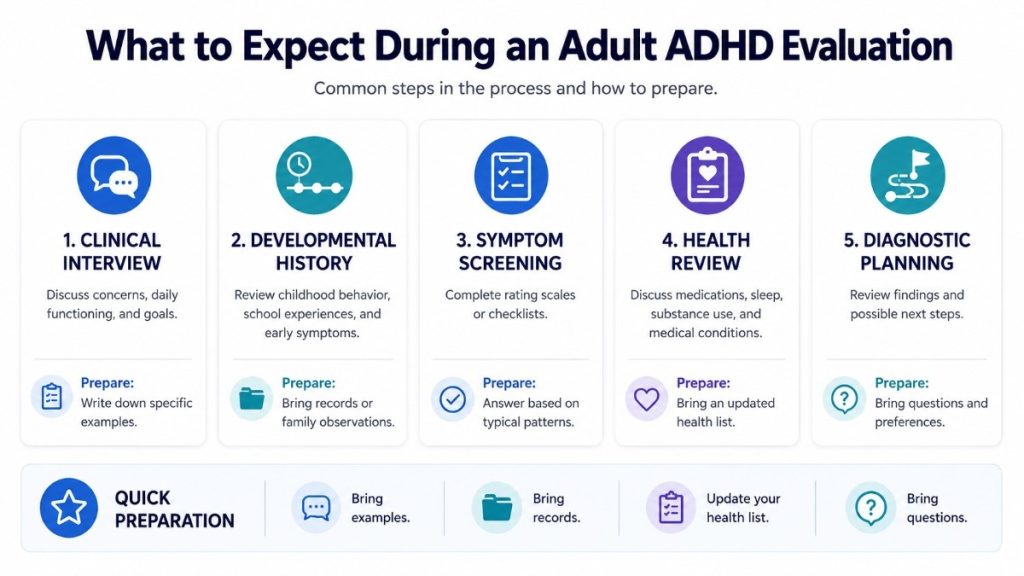
The process varies by symptoms, history, and available records. Knowing the usual steps can reduce uncertainty.
| Evaluation step | What may happen | How to prepare |
| Clinical interview | Discuss current concerns, daily functioning, and treatment goals | Write down specific examples |
| Developmental history | Review childhood behavior, school experiences, and early symptoms | Bring records or family observations |
| Symptom screening | Complete validated rating scales or checklists | Answer based on typical patterns |
| Health review | Discuss medications, sleep, substance use, and medical conditions | Prepare an updated health list |
| Diagnostic planning | Review findings and possible next steps | Bring questions and preferences |
Knowing what happens at a first psychiatric appointment can help you organize your history and communicate concerns clearly.
Clinical Interview
The clinician may ask when the symptoms began, where they occur, how often they happen, and how they affect work, education, home responsibilities, finances, driving, or relationships.
Relevant symptoms must have begun before age 12. The clinician may ask about report cards, teacher comments, family memories, or other long-standing patterns.
Screening Tools
You may complete ADHD rating scales before or during the appointment. A partner or family member may sometimes provide observations with your permission.
Screening results support clinical judgment but do not replace it. A high score does not automatically confirm ADHD.
Medical and Mental Health Review
The clinician may review anxiety, depression, trauma, sleep problems, learning difficulties, substance use, medication effects, and physical health concerns. These conditions can coexist with ADHD or produce similar symptoms.
Depending on your history, the clinician may recommend medical follow-up, psychological testing, records review, or another specialist. These steps support a safer, more accurate plan.
How to Prepare for Your Appointment
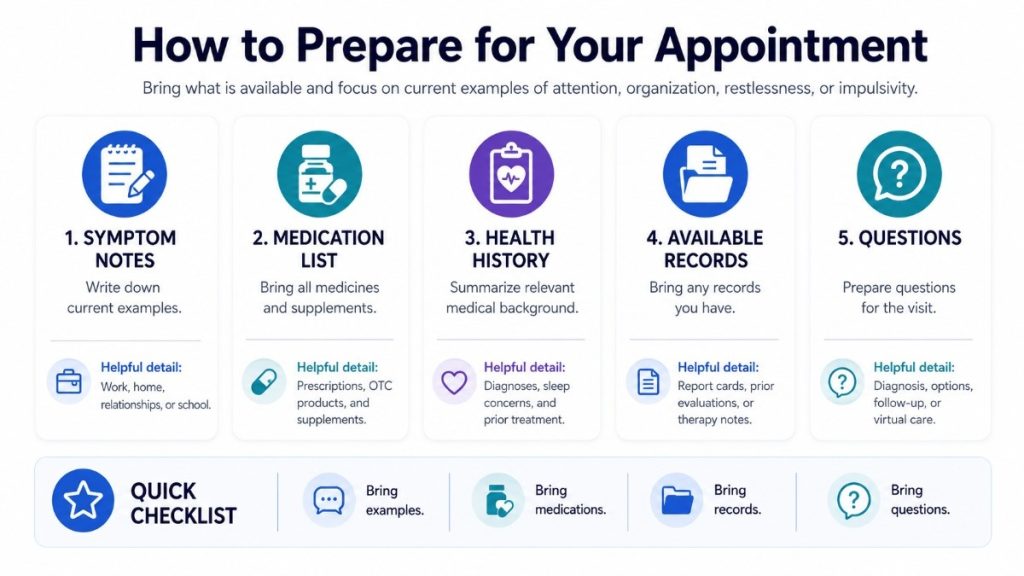
You do not need a perfect childhood timeline. Bring what is available and focus on current examples of attention, organization, restlessness, or impulsivity.
| What to prepare | Helpful details |
| Symptom notes | Examples from work, home, relationships, or school |
| Medication list | Prescriptions, over-the-counter products, and supplements |
| Health history | Medical diagnoses, sleep concerns, and previous treatment |
| Available records | Report cards, prior evaluations, or therapy notes |
| Questions | Concerns about diagnosis, options, follow-up, or virtual care |
Before the visit, note when symptoms are easiest or hardest to manage and whether they change with stress, sleep, caffeine, deadlines, or work structure.
A trusted family member or partner may remember long-term patterns. Their input can help, but the evaluation should respect your privacy and consent.
Choose a quiet setting for a virtual visit. Test your camera, microphone, internet connection, and patient portal access. Keep identification, insurance information, and your medication list nearby.
Avoid changing prescribed medication or substance use solely to influence the evaluation. Discuss current use honestly so the clinician can interpret symptoms and consider safety.
Can Adult ADHD Evaluations Be Completed Online in Georgia?
Yes. Many parts of an adult ADHD evaluation can be completed through secure virtual appointments for patients located in Georgia.
During an online evaluation, the clinician may:
- Discuss your symptoms, concerns, and treatment goals
- Review your medical, mental health, and medication history
- Ask about childhood symptoms and current daily challenges
- Use ADHD screening questionnaires or rating scales
- Recommend follow-up care, records, or additional testing
Before the appointment, choose a quiet and private location. Test your internet connection, camera, microphone, and patient portal access.
Keep your identification, insurance information, medication list, and symptom notes nearby. Available school records or previous evaluations may also be helpful.
Some patients may need an in-person examination, laboratory testing, medical records, or an outside referral. The clinician will explain whether these steps are necessary.
A virtual appointment does not guarantee an ADHD diagnosis or a particular medication. Recommendations depend on your symptoms, health history, clinical findings, safety needs, and current prescribing requirements.
What Happens After the Evaluation?
Possible outcomes include ADHD, another diagnosis, co-occurring conditions, insufficient information, or a recommendation for further assessment.
When ADHD is diagnosed, care is individualized. Options may include education, organization strategies, psychotherapy, accommodations, medication, or combined care, depending on symptoms, health history, risks, preferences, and goals.
Follow-up may review benefits, side effects, sleep, mood, health factors, and progress toward daily goals. Treatment can be adjusted over time.
When to Seek Professional Help
Consider speaking with a mental health professional when attention, organization, restlessness, or impulsivity repeatedly disrupts your daily life. You do not need to wait until the problems become severe.
An evaluation may be helpful if you:
- Miss deadlines, appointments, bills, or important responsibilities
- Struggle to begin, organize, or complete routine tasks
- Experience ongoing problems at work, school, or in relationships
- Feel overwhelmed despite using calendars, reminders, or other strategies
- Have symptoms alongside anxiety, depression, poor sleep, or substance use
Seek help sooner if your symptoms are worsening, affecting your safety, or causing significant emotional distress. A professional evaluation can determine whether ADHD, another condition, or several overlapping concerns may be contributing.
If you are in immediate danger or thinking about harming yourself or someone else, contact emergency services or go to the nearest emergency department.
Reaching out for support is an important first step. ADHD is a treatable condition, and structured care can lead to meaningful improvement in emotional well-being, productivity, and daily life.
How MD Psychiatry Clinic Helps

MD Psychiatry Clinic provides evidence-based ADHD evaluation and treatment through secure online and in-office psychiatric services for patients across Georgia. Care is personalized based on each patient’s symptoms, medical history, and clinical needs.
Patients can:
- Access comprehensive psychiatric care options for ADHD, anxiety, depression, PTSD, autism, and related mental health conditions.
- Learn more about the providers by visiting meet our specialist team before scheduling an appointment.
- Discover our clinic and mission and the clinic’s commitment to accessible, patient-centered psychiatric care.
- Easily contact our team to ask about appointments, insurance, virtual visits, or general questions.
Reaching Out for Support
ADHD is a treatable condition, and structured care can lead to meaningful improvement in emotional well-being, productivity, and daily life.
MD Psychiatry Clinic provides systematic, evidence-based ADHD evaluation and treatment through both online mental health care and in-office services across Georgia.
Call: 770-680-2302
Email: patient@mdpsychclinic.com
Hours: Monday–Friday, 8:00 AM–5:00 PM
Frequently Asked Questions
1. Can I book an adult ADHD evaluation online in Georgia?
Yes. MD Psychiatry Clinic accepts online requests and provides virtual psychiatric care across Georgia, subject to suitability and availability. Request a visit through the website or call 770-680-2302.
2. Can the entire ADHD evaluation and treatment process happen virtually?
Often, interviews, screening, history review, and follow-up can occur virtually. Some patients need records, laboratory work, an in-person examination, or outside testing. Virtual care does not guarantee diagnosis, medication, or fully remote treatment.
3. How long does an adult ADHD evaluation take?
The timeline varies. Some evaluations require one detailed appointment; others need follow-up, outside records, collateral information, or testing. Ask whether forms must be completed in advance.
4. What should I bring to an adult ADHD evaluation?
Bring identification, insurance details, a medication list, health history, and available school or prior evaluation records. Prepare examples showing effects on work, home life, relationships, finances, or education.
5. Will an ADHD screening questionnaire confirm the diagnosis?
No. A questionnaire can identify patterns for review, but it cannot diagnose ADHD alone. A clinician must consider history, childhood onset, impairment across settings, medical factors, and other explanations.