


Starting ADHD medication is not the end of treatment. Follow-up visits help your provider determine whether medication improves attention, organization, impulse control, and daily functioning without causing unacceptable side effects.
The CDC estimates that 7 million U.S. children ages 3–17, or 11.7%, currently have an ADHD diagnosis based on 2024 survey data.
A follow-up is a focused, collaborative appointment. You can discuss improvements, remaining difficulties, and concerns about sleep, appetite, mood, or medication timing. The goal is safe, individualized care not judgment.
What Is an ADHD Medication Follow-Up Visit?
An ADHD medication follow-up occurs after medication is started, changed, or continued. It is part of ongoing psychiatric ADHD care in Georgia, not simply a prescription-renewal visit.
The provider reviews benefits, side effects, physical health, and daily functioning. They may continue the plan, adjust it, request more information, or discuss another approach.
Unlike a first psychiatric evaluation visit, the follow-up focuses mainly on changes since your previous appointment. The clinician may revisit the diagnosis when new symptoms appear.
Why Regular ADHD Medication Monitoring Matters
Medication response can change with age, stress, schedules, school demands, work responsibilities, sleep, and other health conditions. A treatment plan may need review when daily needs change.
CDC research estimated that 15.5 million U.S. adults, or 6.0%, had a current ADHD diagnosis in 2023, with about half diagnosed during adulthood.
The American Academy of Pediatrics recommends adjusting ADHD medication to achieve the greatest benefit with tolerable side effects and monitoring treatment over time.
Follow-up appointments also support shared decision-making. You should understand why medication is recommended, what changes to monitor, and when to contact the clinic before your next visit.
What Does the Provider Check?
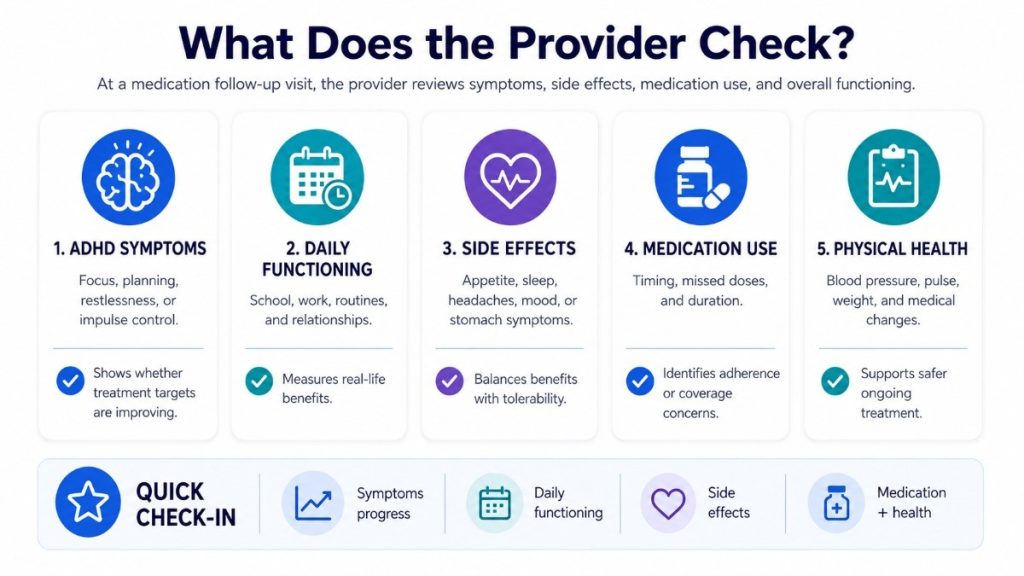
The discussion depends on your age, medication type, medical history, symptoms, and how recently the treatment plan changed.
| Review area | What may be discussed | Why it matters |
| ADHD symptoms | Focus, planning, restlessness, or impulse control | Shows whether treatment targets are improving |
| Daily functioning | School, work, routines, and relationships | Measures meaningful real-life benefits |
| Side effects | Appetite, sleep, headaches, mood, or stomach symptoms | Balances benefits with tolerability |
| Medication use | Timing, missed doses, and duration | Identifies adherence or coverage concerns |
| Physical health | Blood pressure, pulse, weight, and medical changes | Supports safer ongoing treatment |
Symptoms and Daily Functioning
Your provider may ask for examples instead of accepting “better” or “worse.” Helpful details include whether you finish tasks more consistently, miss fewer deadlines, interrupt less, or manage frustration more effectively.
The clinician may assess whether concentration problems reflect ADHD or anxiety symptoms. Worry, poor sleep, panic, depression, trauma, and certain medical conditions can also affect attention.
For children and teens, caregiver or teacher observations may cover classroom behavior, homework, emotional changes, peer relationships, appetite, sleep, and growth.
Medication Benefits and Duration
Explain when the medication begins helping and when its effects appear to fade. Include your morning routine, school or work schedule, evening responsibilities, and any noticeable “wearing-off” period.
The provider may ask whether the medication helps with:
- Starting and completing tasks
- Listening and following instructions
- Managing impulsive behavior
- Staying organized throughout the day
- Regulating frustration or restlessness
Do not take extra medication or change its timing without instructions. Record what you notice and discuss it with your prescriber.
Side Effects and Physical Health

Common stimulant side effects include reduced appetite, sleep difficulty, headache, stomach discomfort, irritability, faster heart rate, or higher blood pressure. The FDA advises careful use and monitoring of prescription stimulants.
Mention side effects even when they seem minor. Their timing, frequency, and effect on daily life can guide monitoring or treatment changes.
The clinician may review blood pressure, pulse, weight, appetite, and sleep. Current stimulant labeling recommends monitoring blood pressure and pulse during treatment.
In adults, a meta-analysis of 10 clinical trials involving 2,665 participants found that stimulant treatment increased resting heart rate by an average of 5.7 beats per minute and systolic blood pressure by 2.0 mmHg compared with placebo
Inform your provider about new prescriptions, supplements, pregnancy, heart symptoms, seizures, major weight changes, or substance use. These factors may affect medication safety.
Mood, Anxiety, and Coexisting Conditions
A follow-up may include questions about sadness, irritability, worry, panic, substance use, or unusual behavior. ADHD can occur alongside other mental health conditions.
When low mood affects motivation, sleep, or concentration, depression medication management support may need consideration within the broader treatment plan.
When worry, physical tension, or panic increases, the provider may discuss anxiety medication care options or other treatments. Decisions should reflect the complete clinical picture.
Will the ADHD Medication Be Changed?
Not necessarily. A follow-up visit does not automatically lead to a higher dose or different medication. When benefits are meaningful and side effects are manageable, the current plan may continue.
A provider may consider a change when:
- Symptoms remain significantly disruptive
- Benefits do not last through necessary activities
- Side effects interfere with daily life
- Mood, anxiety, sleep, or behavior worsens
- A medical or medication interaction appears
Possible changes include adjusting the dose, timing, formulation, or medication. The clinician may also recommend therapy, behavioral strategies, sleep support, school accommodations, workplace tools, or further evaluation.
Never stop, restart, split, or increase medication without guidance from the prescribing clinician.
How Often Are Follow-Up Visits Needed?
Follow-up frequency is individualized. Appointments are usually closer together after starting medication or making a change. Once symptoms and side effects are stable, visits may be spaced farther apart.
Children, teens, people with complex health histories, and patients experiencing side effects may require more frequent monitoring.
The American Academy of Pediatrics notes that children may need monthly follow-ups while finding an effective treatment plan, followed by visits at least every three to six months once treatment is stable.
Prescription requirements, clinic policies, insurance rules, medication type, and clinical needs can also affect scheduling.
Periodic visits remain important even when medication seems effective. Your provider still needs to review benefits, physical health, daily functioning, and whether the treatment plan remains appropriate.
How to Prepare for an ADHD Medication Follow-Up
You do not need a perfect symptom diary. A few concrete notes can help the clinician understand your experience and make the appointment more productive.
Bring or prepare:
- Your medication and supplement list
- Notes about benefits and remaining symptoms
- Side effects, including timing and severity
- Available blood pressure, pulse, or weight readings
- Questions about dosing, refills, or next steps
Take medication only as directed unless the clinician gives different instructions. Keep your pharmacy details and relevant medical updates available.
Parents may also bring school reports, teacher feedback, behavioral notes, or information about changes at home. Adults may find it helpful to record work performance, driving concerns, missed responsibilities, sleep patterns, or relationship difficulties.
What Happens During a Virtual ADHD Follow-Up?

A virtual follow-up can include the same review of symptoms, functioning, side effects, medication use, and treatment goals. A private space and reliable internet connection help protect confidentiality.
The provider may request recent vital signs from a home device, pharmacy, primary care office, or in-person visit. Requirements depend on clinical judgment and the medication being used.
| Virtual follow-up | In-office follow-up |
| Reduces travel for Georgia patients | Staff can obtain vital signs directly |
| May fit work or school schedules | Supports physical assessment when needed |
| Requires privacy and stable internet | Requires travel to the office |
| May require outside vital readings | May suit certain safety concerns |
Virtual care is not appropriate for every situation. The provider may recommend an office visit, laboratory testing, primary care evaluation, or urgent care when additional assessment is necessary.
Before a virtual visit, test your camera, microphone, and internet connection. Choose a quiet location where you can speak openly without being overheard.
Parents should arrange for the child or teen to attend when requested. The clinician may need to speak with the patient and caregiver together or separately.
Questions to Ask During the Follow-Up Visit
Asking questions can help you take an active role in treatment. You do not need to understand every medication detail before the appointment.
Consider asking:
- What improvements should I expect?
- Which side effects require an earlier call?
- How long should the medication remain effective?
- Do I need to monitor vital signs?
- When should my next appointment occur?
You can also ask what to do if a dose is missed, a refill is delayed, or medication is unavailable. Follow the clinician’s instructions rather than making changes independently.
When to Seek Professional Help
Contact your prescriber when symptoms remain disruptive, side effects persist, medication coverage becomes inconsistent, or mood and behavior change.
These concerns may indicate when psychiatric support may help before your next routine appointment.
Seek prompt medical care for chest pain, shortness of breath, fainting, severe agitation, hallucinations, or other concerning reactions. The FDA advises emergency evaluation for serious stimulant side effects or overdose symptoms.
Contact the prescribing office promptly if medication causes significant appetite loss, severe insomnia, major mood changes, or symptoms that interfere with school, work, relationships, or basic daily activities.
For suicidal thoughts, self-harm risk, or immediate danger, call 911 or call or text 988 in the United States. Do not wait for a routine medication appointment.
How MD Psychiatry Clinic Helps

MD Psychclinic provides accessible, evidence-based psychiatric care for children, teens, and adults across Georgia. Patients can receive support through secure virtual appointments and in-office visits when clinically appropriate.
The clinic supports patients through:
- Individualized ADHD care: Treatment plans are based on symptoms, medical history, daily challenges, treatment goals, and medication response.
- Ongoing medication monitoring: Available psychiatric care services include medication reviews, side-effect monitoring, symptom assessment, and treatment adjustments when appropriate.
- Experienced clinical support: Our psychiatric care team helps patients understand medication benefits, safety concerns, follow-up needs, and practical next steps.
- Patient-focused treatment: Patients can Meet our Specialist team and learn about the clinic’s commitment to respectful communication, secure care, and evidence-based treatment.
Reaching Out for Support
ADHD is a treatable condition, and structured care can lead to meaningful improvements in emotional well-being, productivity, relationships, and daily life.
MD Psychiatry Clinic provides systematic ADHD evaluation, medication management, and follow-up care through online mental health services and in-office appointments across Georgia.
Patients can Contact with our support team to ask about appointment availability, insurance, virtual visits, or in-office care.
Frequently Asked Questions
1. How long does an ADHD medication follow-up visit take?
Follow-ups are usually shorter and more focused than an initial evaluation, but appointment length varies.
New side effects, complex symptoms, caregiver input, or possible medication changes may require additional discussion.
2. Does every ADHD follow-up lead to a dose increase?
No. The provider may continue the current plan when benefits are clear and side effects are manageable.
Changes depend on your symptoms, daily functioning, medication duration, physical health, side effects, and treatment goals.
3. Which ADHD medication side effects should I report?
Report appetite changes, sleep difficulty, headaches, stomach discomfort, irritability, mood changes, dizziness, heart symptoms, or anything affecting daily life.
Contact the prescriber sooner for symptoms that are severe, sudden, or worsening.
4. Can I book an online ADHD medication follow-up in Georgia?
MD Psychiatry Clinic offers secure virtual psychiatric appointments across Georgia when telehealth is clinically appropriate.
The office can confirm availability, required information, insurance participation, and whether an in-person assessment or updated vital signs are needed.
5. What if I cannot provide vital signs for a virtual visit?
Contact the clinic before your appointment. The team may explain acceptable options, including home readings or measurements from a pharmacy or medical office.
An in-person visit may be recommended when reliable measurements are clinically necessary.