
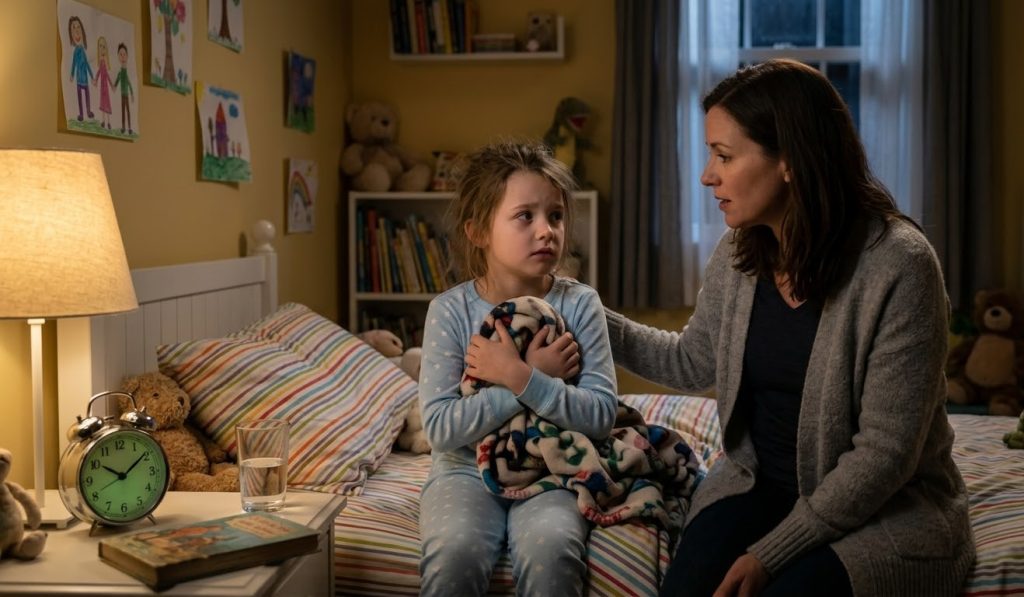

When a child struggles to fall asleep, it can feel exhausting for the whole family. Bedtime should bring comfort and rest, but anxiety can turn it into a time of fear, tears, and repeated wake-ups. Many children cannot fully explain what they feel, so parents are left trying to make sense of the signs.
Those signs matter. Sleep anxiety can affect mood, focus, behavior, and family routines. When parents understand what is happening, they can respond with patience, calm support, and steps that help their child feel safe again.
What Is Child Sleep Anxiety?
Child sleep anxiety is a pattern of fear or worry that shows up at bedtime or during the night. It is more intense than a passing fear of the dark or a short phase of bedtime resistance.
A child with sleep anxiety may worry about being alone, fear that something bad will happen, or feel unable to relax once the room gets quiet. In some cases, these struggles overlap with broader concerns in child mental health and may need closer attention.
When this happens often, sleep becomes stressful instead of restful. That can affect both the child’s well-being and the family’s daily rhythm.
Common Child Sleep Anxiety Symptoms Parents Should Watch
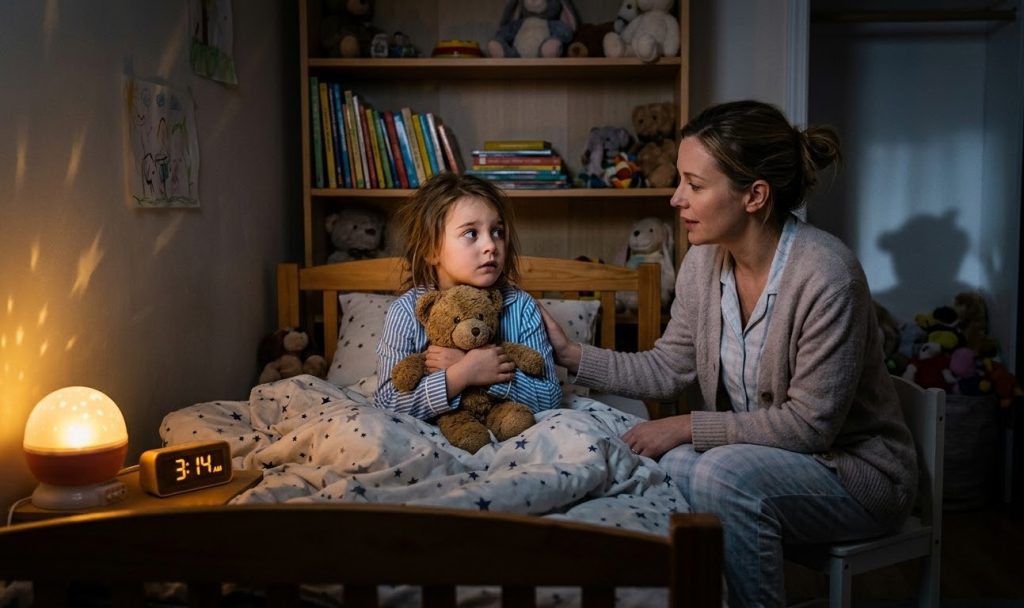
Children rarely say, “I feel anxious at bedtime.” More often, the signs appear through behavior, emotions, body complaints, or repeated nighttime fears. Many of these patterns also appear in children dealing with anxiety symptoms during the day.
Behavioral Symptoms
Behavioral changes are often the first warning signs parents notice. These patterns usually show up as bedtime avoidance or repeated efforts to delay sleep.
- Refusing to go to bed
- Asking for “one more” story, drink, or hug
- Getting out of bed many times
- Insisting a parent stay in the room
- Moving into a parent’s bed during the night
These behaviors are not always defiance. In many cases, they are a child’s way of trying to stay close to safety.
Emotional Symptoms
Some children become visibly upset when bedtime gets near. Their fear may seem bigger at night because everything feels quieter and less predictable.
- Crying when it is time for bed
- Fear of being alone
- Panic when a parent leaves the room
- Intense clinginess at night
- Fear of darkness, noises, or imaginary threats
Emotional symptoms can rise quickly, especially after a stressful event or change at home.
Physical Symptoms
Anxiety often shows up in the body, especially in children who cannot fully describe what they are feeling. Physical complaints at bedtime should not be ignored.
- Stomachaches
- Headaches
- Sweating
- Shaking
- Fast heartbeat
- Muscle tension
These symptoms are real. The body responds to fear even when there is no physical danger.
Cognitive Symptoms
Some children stay awake because their thoughts do not settle down. Their mind stays alert even when the body is tired.
- Repeated worrying thoughts
- Fear that something bad will happen
- Trouble relaxing in bed
- Nightmares or fearful images
- Overthinking small concerns
When these thought patterns continue, children may begin to connect bedtime with distress instead of comfort.
Symptom Overview Table
| Symptom Type | Common Signs | What Parents May Notice |
| Behavioral | Bedtime resistance, repeated wake-ups | Child avoids sleep or seeks constant reassurance |
| Emotional | Fear, crying, clinginess | Child seems distressed as bedtime approaches |
| Physical | Stomach pain, sweating, fast heartbeat | Child complains of feeling unwell at night |
| Cognitive | Worrying thoughts, nightmares | Child cannot “switch off” at bedtime |
Causes of Sleep Anxiety in Children
Sleep anxiety usually has more than one cause. It can grow from normal development, stress, family changes, or an already sensitive nervous system.
Separation Anxiety
Younger children often feel safest near a parent. Bedtime can trigger fear because it means being apart and losing that sense of protection.
Stress or Life Changes
A move, school change, family conflict, illness, or loss can increase bedtime anxiety. Even a change that seems small to an adult can feel huge to a child.
Screen Exposure Before Bed
Fast-paced shows, games, and videos can make it harder for the brain to slow down. For some children, this leads to tension, restlessness, and trouble settling at night.
Overactive Imagination
Children have vivid imaginations. At bedtime, ordinary shadows, sounds, or thoughts can become scary and feel completely real.
Lack of Routine
Children feel more secure when bedtime is predictable. Inconsistent sleep schedules can make the evening feel uncertain, which may increase anxiety. In some families, these patterns overlap with concerns seen in sleep disorders.
When Should Parents Be Concerned?
Some bedtime fears are part of normal childhood. The concern grows when those fears become frequent, intense, or start affecting daytime life.
Parents should pay closer attention when:
- Symptoms last more than two to four weeks
- The child seems tired during the day
- School performance starts to drop
- Mood becomes more irritable or tearful
- Bedtime struggles disrupt the whole household
A child may also begin avoiding sleepovers, travel, or quiet time alone. These patterns can point to anxiety that needs more support.
How Child Sleep Anxiety Affects Development
Sleep is not just about rest. It supports emotional balance, learning, attention, and physical growth. When anxiety keeps interrupting sleep, the effects can spread into many parts of a child’s life.
A child with poor sleep may have trouble focusing in class, managing frustration, or recovering from daily stress. Over time, this can lead to more emotional ups and downs and lower confidence.
Children who do not sleep well may also become more sensitive to everyday challenges. That can create a cycle where anxiety worsens sleep, and poor sleep worsens anxiety.
How to Help a Child With Sleep Anxiety at Home

Simple changes at home can make a real difference. Children respond best to calm, steady support rather than pressure or punishment.
Build a Predictable Bedtime Routine
A steady routine helps the brain and body prepare for sleep. Repetition gives children a sense of safety.
- Keep bedtime and wake time consistent
- Use calming activities like reading or soft music
- Follow the same order each night
- Avoid rushing through the routine
Create a Calm Sleep Space
The bedroom should feel quiet, safe, and comfortable. Small changes in the environment can help lower nighttime fear.
- Use a soft nightlight if needed
- Keep the room cool and comfortable
- Reduce loud sounds and bright lights
- Make the bed feel cozy and secure
Respond With Reassurance, Not Repeated Negotiation
Children need comfort, but they also need clear boundaries. A calm response helps them feel supported without turning bedtime into a long struggle.
- Acknowledge the fear without arguing about it
- Use a calm voice
- Offer brief reassurance
- Return to the bedtime routine
Limit Stimulating Activities Before Bed
Busy evenings can make anxious thoughts stronger. Slower, quieter habits help the nervous system settle down.
- Turn off screens at least an hour before bed
- Avoid exciting games late in the evening
- Choose quiet activities before sleep
When sleep problems continue despite routine changes, the child may need care focused on sleep treatment in Georgia.
Professional Treatment Options for Child Sleep Anxiety
When home strategies do not bring enough relief, professional care can help children feel more in control. Treatment is often gentle, practical, and tailored to the child’s age.
Cognitive Behavioral Therapy
This approach helps children understand anxious thoughts and learn healthier responses. It gives them tools to manage fear in a simple and structured way.
Play Therapy
Younger children often express emotions better through play than through direct conversation. This method can help them process fears in a safe setting.
Family Counseling
Parents play a major role in bedtime routines and emotional support. Family-based care can help everyone respond more effectively.
Medication in Select Cases
Some children with more severe symptoms may need medical evaluation. Medication is not the first step for most children, but it can be considered carefully when needed.
For older children and teens, a first visit with a teen psychiatrist in Georgia may help clarify whether sleep anxiety is part of a larger emotional pattern.
How Sleep Anxiety Differs From Other Sleep Disorders
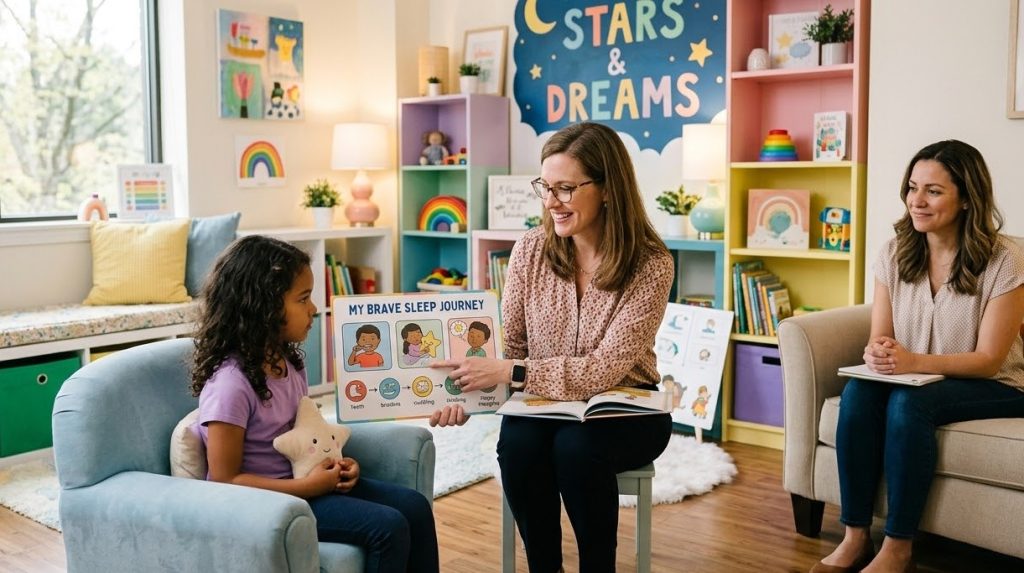
Not every child who struggles at night has sleep anxiety. Some sleep problems come from different causes and need a different treatment plan.
| Condition | Main Feature | How It Differs From Sleep Anxiety |
| Night terrors | Sudden screaming or distress during sleep | Child often does not remember the episode |
| Insomnia | Trouble falling or staying asleep | May happen without fear or nighttime worry |
| Sleep regression | Temporary sleep disruption | Often tied to development or routine shifts |
| Sleep anxiety | Fear or worry around sleep | Distress is strongly linked to bedtime itself |
A careful evaluation can help parents understand what is driving the problem and what kind of support will help most.
How MD Psych Clinic Supports Children With Sleep Anxiety Across Georgia

At MD Psych Clinic, care is compassionate, structured, and evidence-based. We support children and families across Georgia, including Alpharetta and nearby communities around North Point Mall and Avalon.
If your child is struggling with bedtime fears, frequent waking, or ongoing sleep distress, professional support can help bring clarity and relief. Families can schedule an appointment and connect with a licensed psychiatric provider at a convenient time.
If you have questions about sleep anxiety, treatment options, or virtual care, the team is available to guide you.
MD Psychiatry Clinic
📞 Call: 770-680-2302
📧 Email: hello@mdpsychclinic.com
Hours:
Monday–Friday, 8:00 AM – 5:00 PM
Location:
3235 North Point Parkway, Suite 203
Alpharetta, GA 30005
The office is conveniently located near North Point Mall and easily accessible from GA-400. Both in-person and secure virtual appointments are available for families across Georgia.
Frequently Asked Questions
What age is sleep anxiety most common?
Sleep anxiety often appears between ages 3 and 10. It can also affect older children, especially during stressful periods or major transitions.
Can sleep anxiety go away on its own?
Mild cases may improve with routine, reassurance, and time. Persistent symptoms usually need more structured support.
Is sleep anxiety linked to other mental health concerns?
Yes. Some children with sleep anxiety also struggle with daytime worry, separation fears, or emotional regulation difficulties.
When should a parent seek professional help?
Parents should reach out when symptoms last several weeks, disrupt school or family life, or cause strong distress. In some cases, it also helps to discuss concerns during an online anxiety appointment.