


Living with OCD can feel like carrying a weight that never quite lifts. You’ve tried strategies. You’ve pushed through. But some days, the thoughts still loop, and the urges still pull.
Medication can be a powerful tool in your OCD toolkit. For many adults, the right prescription paired with thoughtful management creates real space for healing. This isn’t about a quick fix. It’s about finding steady support that fits your life.
About 1.2% of U.S. adults experience OCD in a given year. For half of them, symptoms cause serious daily challenges. The good news? With proper medication management, 40-60% of people see meaningful improvement.
First-Line Medications for Adult OCD
SSRIs are the most commonly prescribed medications for OCD. These include sertraline, fluoxetine, and fluvoxamine. They work by balancing brain chemicals linked to anxiety and repetitive thoughts.
Clomipramine is another option. It’s an older medication that can help when SSRIs don’t provide enough relief. Your psychiatrist will discuss benefits and side effects before starting any prescription.
| Medication Type | Common Examples | Starting Approach | Key Consideration |
| SSRI | Sertraline, Fluoxetine | Low dose, gradual increase | May take 10-12 weeks for full effect |
| Clomipramine | Anafranil | Very low starting dose | Requires careful heart monitoring |
| Augmentation | Low-dose antipsychotic | Added only if needed | Used for treatment-resistant cases |
Starting medication is a personal decision. Working with a specialist who understands OCD treatment in Georgia ensures your plan reflects local resources and your unique needs.
Signs You May Need Medication Adjustment
Medication isn’t always “set and forget.” Your body and life change. Your treatment can too. Watch for these signs that a check-in may help:
- Symptoms stay strong after 10-12 weeks at a therapeutic dose
- Side effects make daily tasks harder, not easier
- New stressors at work or home worsen your OCD patterns
- You feel “stuck” even while taking medication consistently
| Sign You Notice | What It Might Mean | Simple Next Step |
| No change after 3 months | Dose may need adjustment | Schedule a medication review |
| Trouble sleeping or nausea | Side effect management needed | Discuss timing or supportive meds |
| Symptoms flare during stress | Plan may need temporary support | Add coping strategies or short-term adjustment |
Talking openly with your provider makes adjustments smoother. If you’re wondering whether it’s time to see an adult psychiatrist, trust that instinct. Small tweaks can create big relief.
When Standard Dosing Isn’t Enough
OCD often needs higher medication doses than depression or anxiety. This is normal. It doesn’t mean your case is “worse.” It means your brain chemistry may require a different approach.
Safe titration means increasing doses slowly. Your psychiatrist monitors your response at each step. This careful process reduces side effects and finds your personal therapeutic zone.
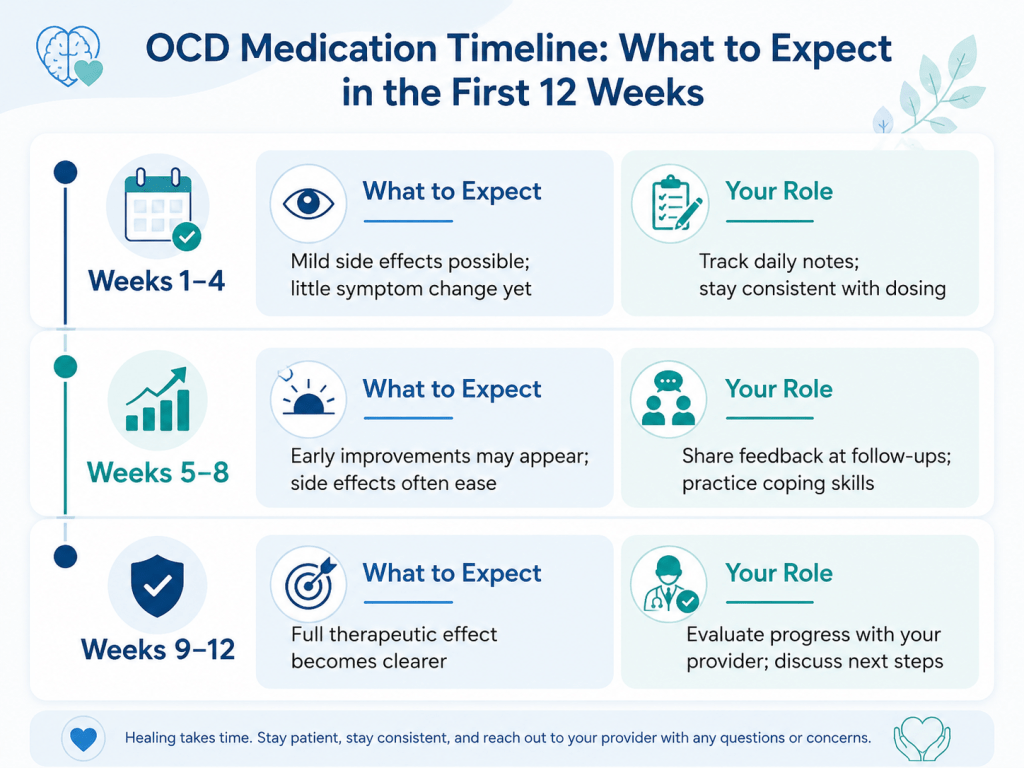
| Timeline | What to Expect | Your Role |
| Weeks 1-4 | Mild side effects possible; little symptom change yet | Track daily notes; stay consistent with dosing |
| Weeks 5-8 | Early improvements may appear; side effects often ease | Share feedback at follow-ups; practice coping skills |
| Weeks 9-12 | Full therapeutic effect becomes clearer | Evaluate progress with your provider; discuss next steps |
Patience matters. Healing isn’t linear. But with steady support, many adults find their symptoms become more manageable. Pairing medication with personalized OCD therapy often strengthens results.
Treatment-Resistant OCD: Next-Step Strategies
Sometimes first-line options don’t provide enough relief. This is called treatment-resistant OCD. It’s not a dead end. It’s a signal to explore additional strategies.
Augmentation means adding a second medication to boost your SSRI. Low-dose antipsychotics like aripiprazole are sometimes used this way. This approach is carefully monitored and reserved for specific cases.
Combining medication with Exposure and Response Prevention (ERP) therapy creates powerful synergy. Medication can lower anxiety enough to engage fully in therapy. Learn more about ERP and medication options to see how they work together.
| Strategy | Best For | What to Discuss With Your Provider |
| Higher-dose SSRI | Partial response to standard dose | Safety monitoring; timeline for re-evaluation |
| Augmentation | Minimal response after adequate SSRI trial | Risks vs. benefits; clear goals for adding medication |
| Therapy + Medication | Anyone seeking lasting skill-building | How to coordinate care between prescriber and therapist |
Newer options like memantine or TMS are also being studied. While not first-line, they offer hope for complex cases. Your psychiatrist stays updated on emerging evidence to guide your choices.
The Role of Ongoing Psychiatric Support

Medication management for OCD is a partnership. It’s not just about writing a prescription. It’s about walking with you through adjustments, setbacks, and successes.
Regular follow-ups prevent small issues from becoming big ones. They also celebrate progress. Even a 40-50% reduction in symptom severity can restore hours of your day. That’s worth acknowledging.
Consistency builds trust. When you see the same provider over time, they learn your patterns. They notice subtle shifts. This continuity is especially valuable for adults managing OCD alongside work, relationships, or other health needs.
If you’re in the Alpharetta area, having access to OCD treatment in Alpharetta means support is close by. Local care reduces barriers and makes follow-ups easier to maintain.
How MD Psych Clinic Supports Your OCD Medication Journey
At MD Psych Clinic, our board-certified psychiatrists specialize in personalized medication management for adults with OCD. We combine evidence-based prescribing with compassionate, ongoing support to help you find the right medication, dose, and timeline for lasting relief.
✅ What we offer:
- Comprehensive OCD evaluation & medication planning
- Careful SSRI titration with side-effect monitoring
- Coordination with therapists for ERP + medication synergy
- Flexible follow-ups (in-person or telehealth) for Georgia patients
📞 Ready to optimize your OCD treatment?
Call 770-680-2302 or Schedule a Consultation to speak with our team today.
📧 Email: hello@mdpsychclinic.com
Hours: Monday–Friday, 8:00 AM – 5:00 PM
Location: 3235 North Point Parkway, Suite 203 Alpharetta, GA 30005
You don’t have to manage OCD alone. Let’s build a plan that works for you.
Frequently Asked Questions
How long does OCD medication take to work?
Most people need 10-12 weeks at a therapeutic dose to see full benefits. Early changes may appear around week 4-6. Patience and consistent dosing matter.
What is the best medication for OCD?
There is no single best OCD medication for everyone. SSRIs are often used first, and clomipramine may be considered in some cases.
The best medication depends on your symptoms, health history, past medication response, and side-effect risk. A psychiatric evaluation helps match the plan to your needs.
When should OCD medication be adjusted?
Consider an adjustment if symptoms persist after 10-12 weeks at a therapeutic dose. Also reach out if side effects interfere with daily life or if new stressors worsen symptoms.
How long should I try an OCD medication before deciding it’s not working?
Give it a full 10-12 week trial at the target dose. If there’s minimal improvement after that, talk with your psychiatrist about next steps like dose changes or augmentation.