


When a child is struggling, parents often feel pulled between worry, confusion, and hope. You may notice mood changes, sleep problems, school stress, anxiety, anger, attention issues, or behavior that feels unlike your child.
A child psychiatric evaluation gives families a clearer picture of what may be happening. It helps identify emotional, behavioral, developmental, and family factors that may be affecting your child’s daily life.
The goal is not to label your child. The goal is to understand their needs, reduce distress, and build a care plan that helps them feel safer, stronger, and more supported.
What Is a Child Psychiatric Evaluation?
A child psychiatric evaluation is a detailed mental health assessment with a trained psychiatric provider. It looks at your child’s emotions, behavior, development, school functioning, sleep, relationships, and family history.
Parents usually share what they have noticed at home, school, and during daily routines. The provider may also speak with your child in a calm, age-appropriate way.
For many families, this evaluation is the first step toward better support. It can guide therapy, school accommodations, parent strategies, medication decisions, or further testing when needed.
| Area Reviewed | Why It Matters |
| Mood and emotions | Helps identify sadness, anxiety, irritability, or emotional swings |
| Behavior patterns | Shows how your child handles rules, frustration, and transitions |
| Attention and learning | Helps clarify focus, school struggles, or possible ADHD concerns |
| Sleep and appetite | Gives clues about stress, anxiety, mood, or daily routine issues |
| Family history | Helps the provider understand risk factors and support needs |
| Social life | Shows how your child connects with peers and family members |
Some children need help after a clear change in behavior. Others have struggled quietly for months before parents realize support may help. Early child mental health care can make the next steps feel less overwhelming.
When Parents Should Consider an Evaluation
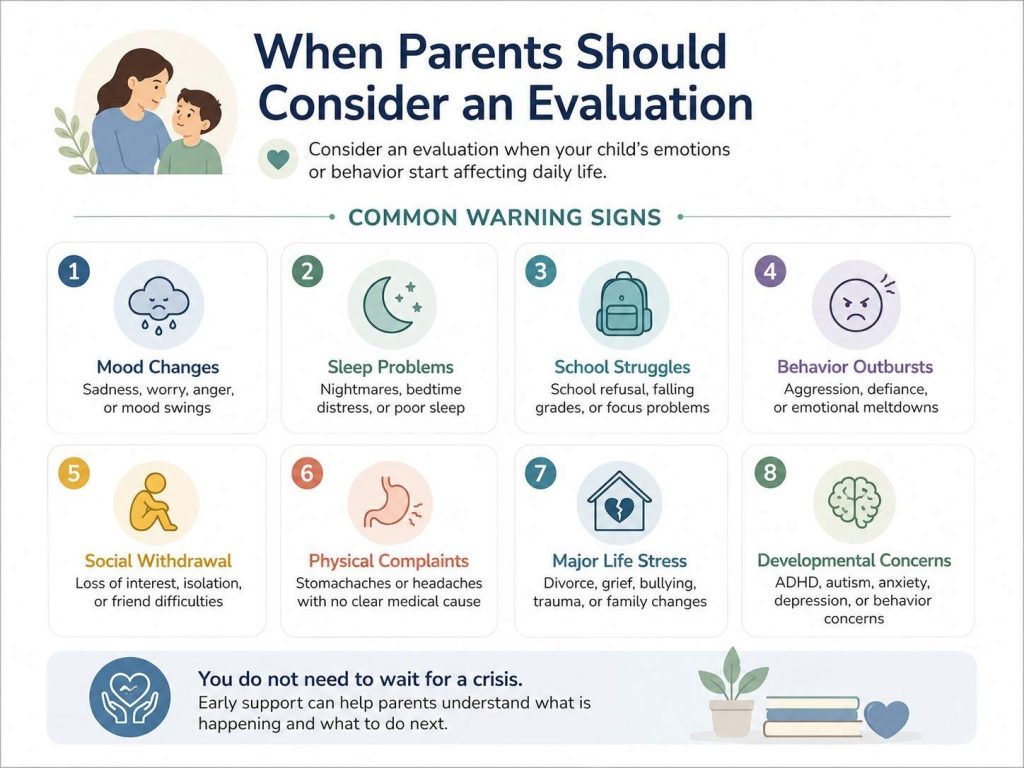
Parents often seek an evaluation when a child’s emotions or behaviors begin affecting everyday life. This may happen at home, school, with friends, or during sleep and routines.
A child does not need to be in crisis to benefit from support. Many evaluations happen because parents want answers before symptoms become harder to manage.
Common reasons parents schedule an evaluation include:
- Frequent sadness, worry, anger, or mood swings
- Panic, fears, or repeated reassurance-seeking
- Trouble sleeping, nightmares, or bedtime distress
- School refusal, falling grades, or focus problems
- Aggression, defiance, or emotional outbursts
- Social withdrawal or loss of interest in activities
- Repeated physical complaints with no clear medical cause
- Changes after divorce, grief, bullying, trauma, or family stress
- Concerns about ADHD, autism, anxiety, depression, or behavior disorders
| Concern Parents Notice | What It May Suggest |
| Constant worry | Anxiety, stress, or fear-based thinking |
| Frequent anger | Emotional regulation struggles or unmet needs |
| School avoidance | Anxiety, bullying, learning issues, or overwhelm |
| Poor sleep | Stress, anxiety, mood concerns, or routine problems |
| Trouble focusing | ADHD, anxiety, sleep issues, or learning challenges |
| Social withdrawal | Depression, anxiety, bullying, or social stress |
Some concerns are easy to miss because children may not explain their feelings clearly. Parents who notice repeated behavior warning signs should trust their observations and seek support.
What Happens During the Appointment?
The first appointment usually starts with a conversation about your child’s current symptoms. The provider may ask when the concerns began, what makes them worse, and what has helped so far.
Parents may be asked about pregnancy, early development, medical history, school performance, friendships, sleep, family stress, and past treatment. These details help the provider understand the full picture.
Your child may also speak with the provider directly. Younger children may need simpler questions, while older children and teens may share more privately.
| Part of the Visit | What Parents Can Expect |
| Parent interview | You describe concerns, history, strengths, and daily challenges |
| Child interview | Your child shares feelings, worries, behaviors, or experiences |
| Symptom review | The provider looks for patterns across home, school, and social life |
| Risk screening | Safety, self-harm thoughts, aggression, or urgent concerns are reviewed |
| Treatment planning | The provider explains possible next steps and care options |
The tone should feel supportive, not judgmental. A good evaluation helps parents feel heard while helping children feel respected and understood.
For teens, privacy can become more important during the visit. Parents preparing for a first teen visit can expect a balance between family involvement and age-appropriate confidentiality.
How Parents Can Prepare

Parents do not need perfect notes before an evaluation. Still, a little preparation can help the provider understand your child’s symptoms more clearly.
Try to bring details about when symptoms started, how often they happen, and how they affect daily life. School feedback, report cards, therapy notes, or past testing can also be helpful.
Helpful items to prepare include:
- A short list of your top concerns
- Examples of recent behavior changes
- Sleep and appetite patterns
- School concerns or teacher feedback
- Current medications or supplements
- Past therapy, testing, or diagnoses
- Medical conditions or major family stressors
- Family history of anxiety, depression, ADHD, autism, or mood disorders
| What to Bring | Why It Helps |
| Symptom notes | Shows patterns that may not appear during the visit |
| School reports | Helps connect symptoms with learning or classroom behavior |
| Medication list | Reduces safety risks and avoids missing important details |
| Therapy records | Helps the provider understand past treatment response |
| Parent questions | Keeps the visit focused on your biggest concerns |
It can also help to ask your child what they want support with. Some children worry the visit means they are “in trouble,” so reassurance matters.
You might say, “We are meeting someone who helps kids with big feelings, stress, sleep, and behavior.” This keeps the message simple, calm, and supportive.
Sleep concerns are especially important to mention because poor rest can affect mood, focus, and behavior. Children with ongoing sleep and anxiety symptoms may need a care plan that addresses both.
What Happens After the Evaluation?
After the evaluation, the provider explains what they noticed and what may be contributing to your child’s struggles. They may discuss a diagnosis, possible diagnosis, or areas that need more observation.
A treatment plan may include therapy, parent coaching, school support, lifestyle changes, medication, or additional testing. The plan should match your child’s age, symptoms, strengths, and family needs.
Medication is not always recommended. When it is discussed, the provider should explain the reason, expected benefits, possible side effects, and follow-up plan.
| Next Step | When It May Help |
| Therapy | Anxiety, depression, trauma, grief, behavior concerns, or coping skills |
| Parent guidance | Emotional outbursts, routines, discipline, ADHD, or family stress |
| School support | Learning issues, attention problems, anxiety, or classroom struggles |
| Medication review | Moderate to severe symptoms or limited response to therapy alone |
| Further testing | Autism, ADHD, learning concerns, or unclear symptom patterns |
Some children need a short-term plan during a stressful season. Others may need longer support for anxiety, ADHD, autism, depression, or behavior concerns.
Families managing attention, routines, sensory needs, or social challenges may benefit from structured ADHD and autism strategies at home. These supports can make daily life feel more predictable.
Older children may need care that fits school pressure, identity changes, friendships, and growing independence. A plan focused on adolescent mental health can help teens feel included in their own care.
How MD Psych Clinic Supports Your Child’s Psychiatric Evaluation

At MD Psych Clinic, our board-certified psychiatrists provide thoughtful psychiatric evaluations for children and adolescents. We focus on understanding your child’s symptoms, strengths, family context, and daily challenges before recommending next steps.
Our team works with parents to create a clear, practical care plan. We aim to reduce confusion, support healthier routines, and help children move toward better emotional balance.
What we offer:
- Comprehensive child and adolescent psychiatric evaluations
- Careful review of mood, anxiety, behavior, focus, and sleep concerns
- Personalized treatment planning based on your child’s needs
- Medication evaluation and monitoring when appropriate
- Parent guidance and coordination with therapists or schools when needed
- Flexible follow-ups, in person or by telehealth, for Georgia families
Ready to understand what your child needs next?
Call 770-680-2302 or Schedule a Consultation to speak with our team today.
Email: hello@mdpsychclinic.com
Hours: Monday–Friday, 8:00 AM – 5:00 PM
Location: 3235 North Point Parkway, Suite 203, Alpharetta, GA 30005
Frequently Asked Questions
How do I know if my child needs a psychiatric evaluation?
A psychiatric evaluation may help if your child’s mood, behavior, sleep, focus, or school performance has changed for several weeks. It is also helpful when anxiety, sadness, anger, social withdrawal, or emotional outbursts are affecting daily life.
What happens during a child psychiatric evaluation?
The psychiatrist reviews your child’s symptoms, medical history, development, school concerns, sleep, family history, and daily routines. Parents usually share their concerns first, and the child may also speak with the provider in an age-appropriate way.
Will my child need medication after the evaluation?
Not always. Medication is only one possible option. The psychiatrist may recommend therapy, parent support, school accommodations, lifestyle changes, further testing, or medication when symptoms are more severe or ongoing.
Can MD Psych Clinic help with anxiety, ADHD, autism, or behavior concerns?
Yes. MD Psych Clinic evaluates children and adolescents for concerns such as anxiety, ADHD, autism-related challenges, mood changes, sleep issues, emotional outbursts, and behavior struggles. The care plan is based on your child’s symptoms and family needs.
Does MD Psych Clinic offer telehealth for child psychiatric evaluations?
MD Psych Clinic offers flexible follow-up options, including in-person and telehealth care for Georgia families when appropriate. The best visit type depends on your child’s age, symptoms, safety needs, and evaluation goals.